10 Massages and Stretches for a Frozen Shoulder
June 15, 2023
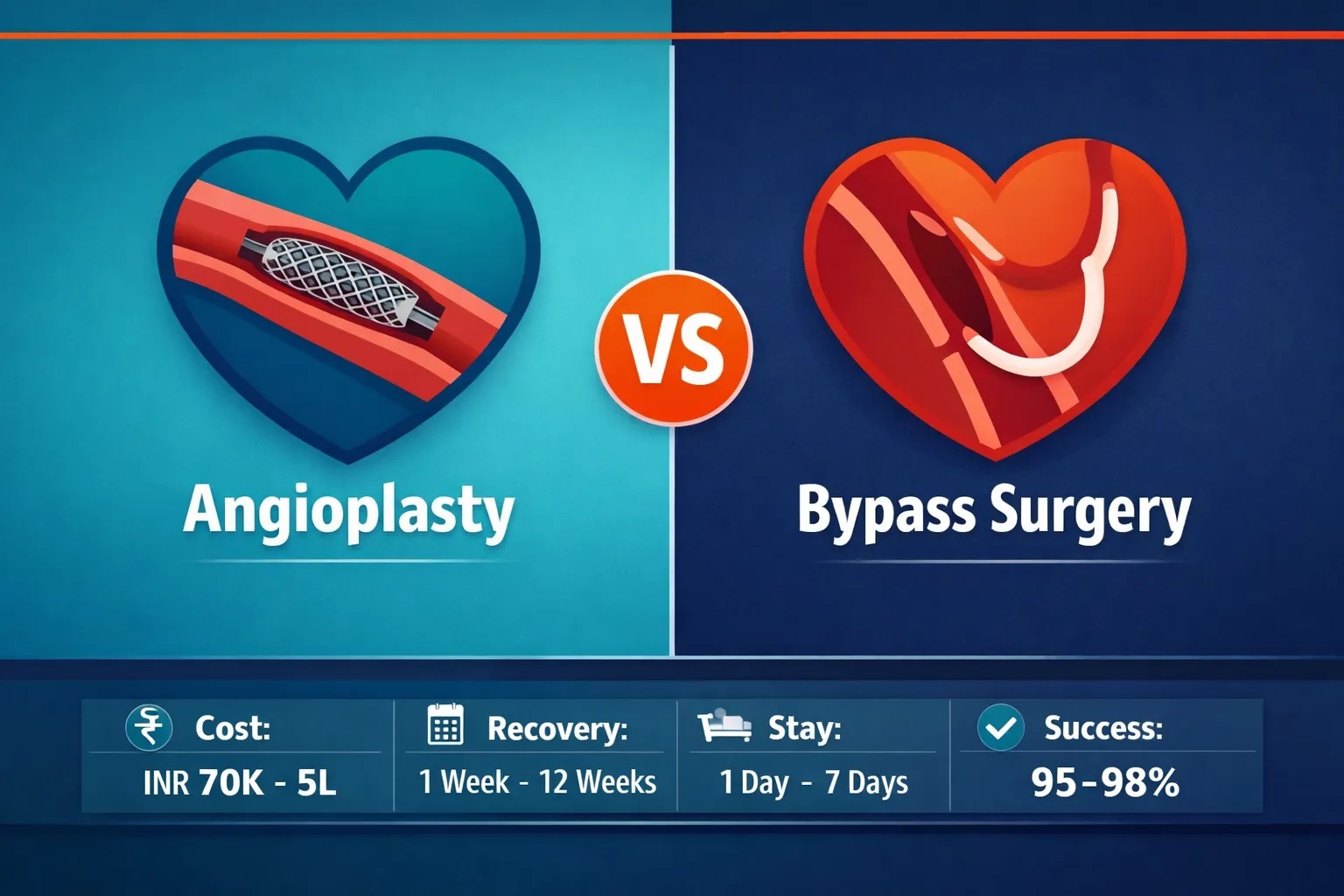
It was 6:30 in the morning. Ramesh, a 52-year-old IT architect from Kondapur, had just started his daily walk near KBR Park. Ten minutes in, a crushing weight pressed down on his chest. His left arm went numb. His wife called an ambulance. Within an hour, he was on a hospital bed staring at a screen filled with grainy black-and-white images of his own heart. Three of his coronary arteries were blocked. And then the cardiologist said something that turned his world upside down: "Mr. Ramesh, we have two options. Angioplasty or bypass surgery. We need to decide."
That moment of panic and confusion hits thousands of families in Hyderabad every single year. You hear two medical terms you barely understand, and suddenly you are expected to make a life-altering choice. Which procedure is safer? Which one costs less? Which one will let you get back to your normal life faster?
If you or someone you love is facing this decision right now, take a breath. This guide will walk you through everything: what each procedure actually does, what it costs in Hyderabad, how long recovery takes, and the one clinical tool most hospitals never explain to patients. No jargon. No fluff. Just clear answers to help you have a smarter conversation with your cardiologist.
In simple terms, angioplasty opens a blocked artery from inside using a tiny balloon and stent, while bypass surgery creates a new route for blood to flow around the blockage using a vessel taken from your own body.
Angioplasty, also called percutaneous coronary intervention (PCI), is a procedure where a cardiologist threads a thin tube called a catheter through a small cut in your wrist or groin. The catheter has a tiny balloon at its tip. Once it reaches the blocked artery, the balloon inflates, pushes the plaque flat against the artery wall, and restores blood flow. In most cases, a small wire mesh tube called a stent is placed inside the artery to keep it propped open long term.
The whole thing takes between 30 minutes and 2 hours. You stay awake the entire time under local anesthesia. Most patients go home within 24 to 48 hours. That is what makes angioplasty appealing. It is fast, less painful, and recovery is measured in days, not months.
When Do Doctors Recommend Angioplasty?
• You have one or two blocked arteries (not all three).
• You are in the middle of a heart attack and need emergency blood flow restoration.
• You are elderly or have other health conditions that make open surgery risky.
• Medication and lifestyle changes alone have not controlled your chest pain.
One thing most websites skip: there are different types of stents. Bare metal stents are cheaper but carry a higher risk of the artery re-narrowing. Drug-eluting stents (DES) release medication over time to prevent scar tissue buildup and are now the standard choice in most hospitals performing angioplasty in Hyderabad.
Coronary artery bypass grafting, or CABG (pronounced "cabbage"), is open-heart surgery. A surgeon takes a healthy blood vessel from your leg, chest wall, or arm and stitches it above and below the blocked section of your coronary artery. Blood now flows through this new "bypass" route, skipping the blockage entirely.
The procedure takes 3 to 6 hours under general anesthesia. You spend 1 to 2 days in the ICU and roughly 5 to 7 days total in the hospital. Full recovery can take 6 to 12 weeks. It is a bigger operation, no question. But it addresses multiple blockages at once and tends to last longer than a stent, particularly for complex cases.
A Detail Most Blogs Miss: Not All Grafts Are Equal
Surgeons typically use two types of grafts. The internal mammary artery (taken from your chest wall) is the gold standard. According to Harvard Health, mammary artery grafts usually last a lifetime. However, saphenous vein grafts (taken from the leg) are less durable. In about half of patients, these vein grafts start to fail after 8 to 10 years. This is a critical factor when you are weighing long-term outcomes.
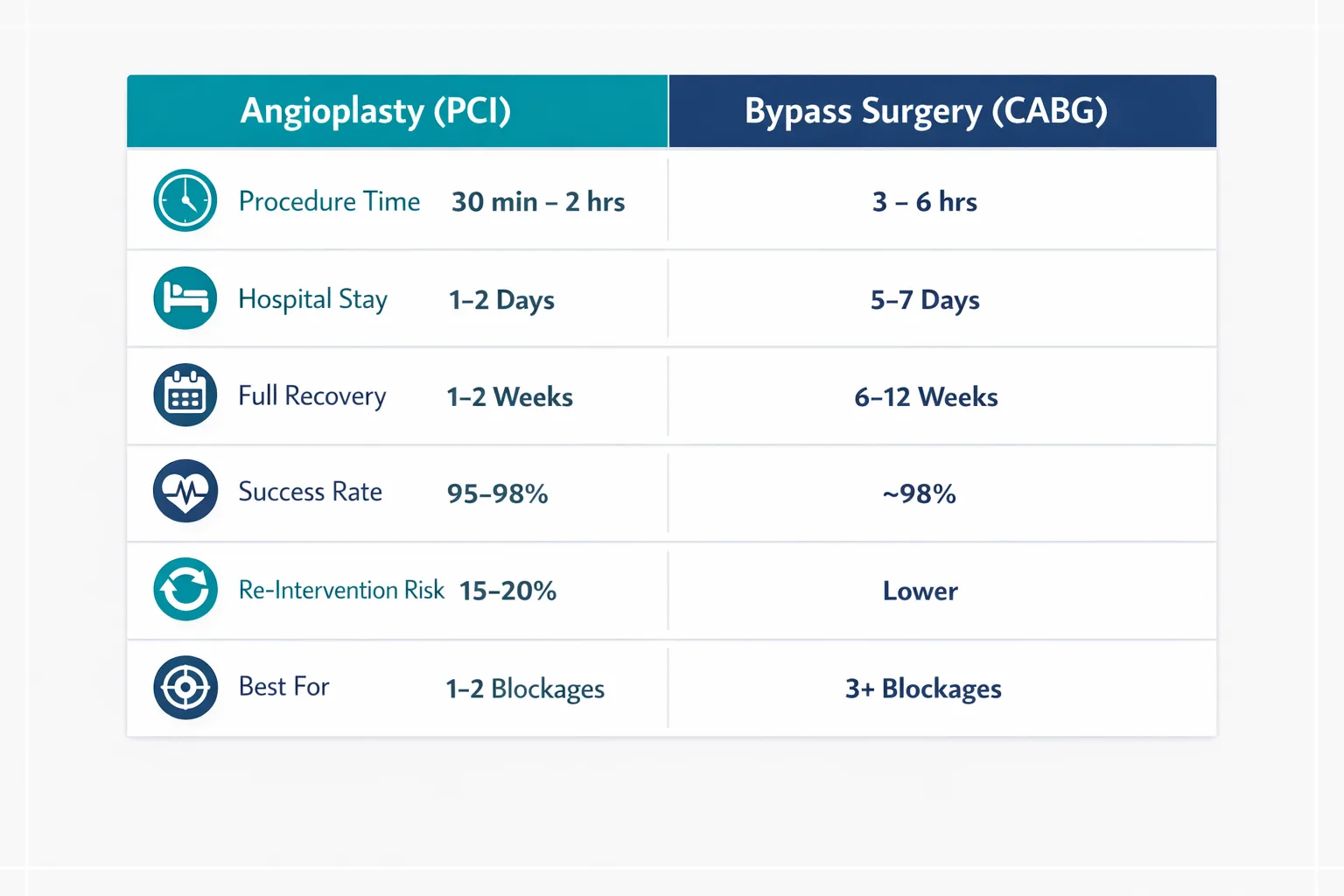
Here is a clear comparison of the two procedures across the factors that matter most to patients and their families:
| Factor | Angioplasty (PCI) | Bypass Surgery (CABG) |
|---|---|---|
| How Invasive | Minimally invasive (catheter through wrist or groin) | Open-heart surgery (8-10 inch chest incision) |
| Procedure Time | 30 minutes to 2 hours | 3 to 6 hours |
| Anesthesia | Local (you stay awake) | General (you are fully asleep) |
| Hospital Stay | 1 to 2 days | 5 to 7 days |
| Full Recovery | 1 to 2 weeks | 6 to 12 weeks |
| Blockages Treated | 1 to 2 arteries (best results) | Multiple arteries at once |
| Re-Intervention Risk | 15-20% may need repeat procedure | Lower (vein grafts may fail after 8-10 years) |
| Success Rate | 95-98% immediate success | ~98% overall success |
| Best Suited For | Single/double blockages, emergencies, high surgical risk patients | Triple-vessel disease, LAD blockage, diabetic patients |
A 2023 review of studies found no significant difference in 10-year survival rates between angioplasty with stenting and bypass surgery, as reported in a 2023 systematic review of clinical studies. So the decision is not about which procedure "wins" overall. It is about which one fits your specific heart condition, your body, and your life.
Here is the part that most hospital websites leave out entirely. When a cardiologist looks at your angiogram, they do not just eyeball it and pick a procedure. They use a clinical scoring system called the SYNTAX score. This score rates how complex your coronary artery blockages are on a scale that typically runs from 0 to over 60.
According to research published in EuroIntervention and validated through the landmark SYNTAX trial:
• Low SYNTAX score (0 to 22): Angioplasty outcomes are comparable to bypass surgery. PCI is often the preferred choice.
• Intermediate score (23 to 32): This is the gray zone. The decision depends on your diabetes status, heart function, kidney health, and age. A team discussion is essential.
• High score (33 and above): Bypass surgery is generally the better option. The blockages are too complex for stents to handle effectively.
The 2021 ACC/AHA/SCAI guidelines for coronary revascularization go even further. They recommend a Heart Team approach for complex cases. That means an interventional cardiologist, a cardiac surgeon, and a clinical cardiologist sit together to review your case before recommending a path forward. This is not one doctor making the call alone. It is a team decision.
If the hospital treating you has not mentioned your SYNTAX score or has not described a Heart Team discussion, ask about it. You have every right to know why one procedure is being recommended over the other.
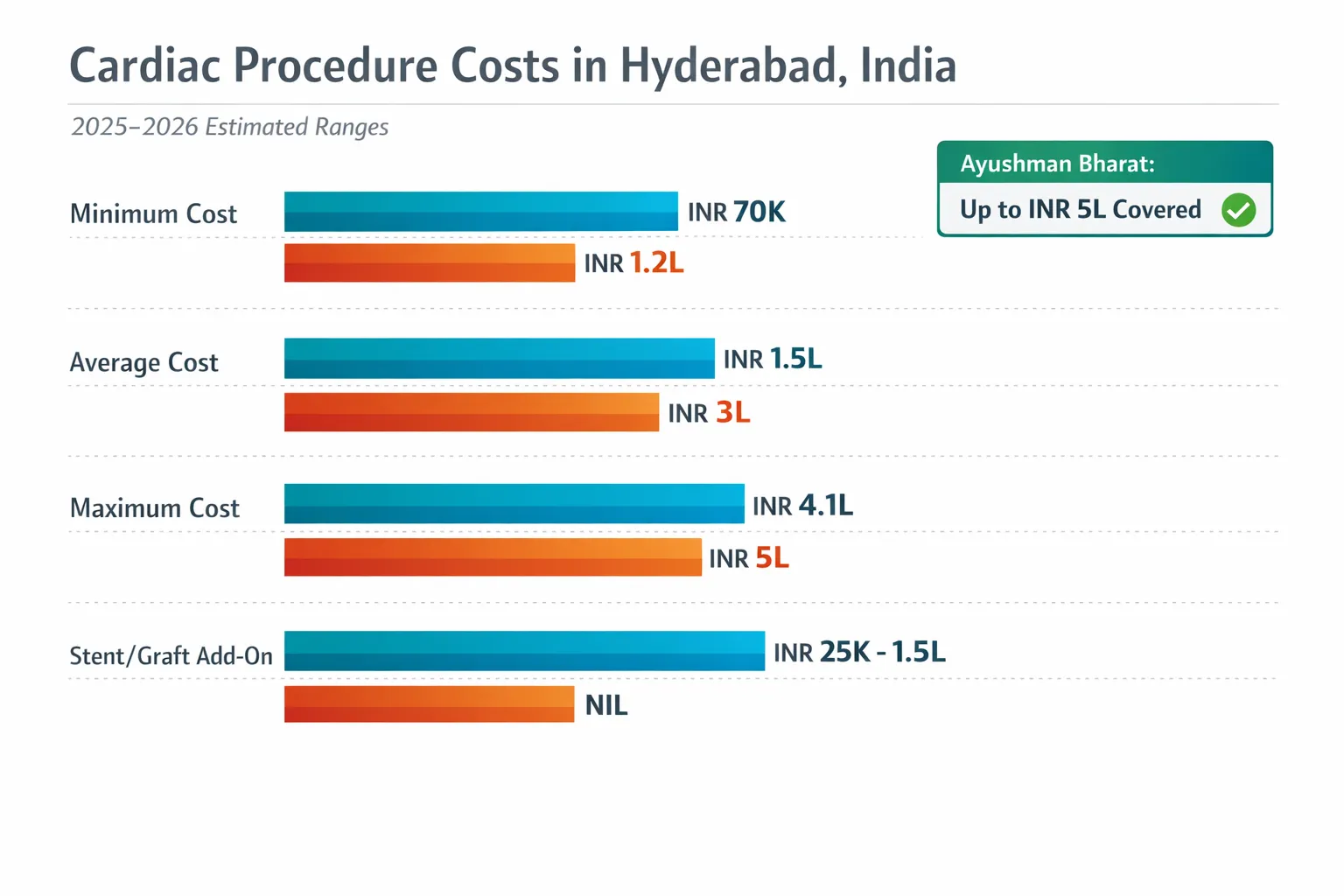
Let us talk numbers. Cost is a real concern for families, and the range in Hyderabad varies depending on the hospital, surgeon, stent type, number of grafts, and room category.
| Cost Factor | Angioplasty | Bypass Surgery |
|---|---|---|
| Procedure Cost Range | INR 70,000 to INR 4,10,000 | INR 1,20,000 to INR 5,00,000 |
| Average Cost | INR 1,10,000 to INR 2,00,000 | INR 2,40,000 to INR 3,62,500 |
| Stent/Graft Cost | INR 25,000 to INR 1,50,000 (DES) | No extra cost (uses your own vessels) |
| Pre-Op Diagnostics | INR 18,000 to INR 20,000 | INR 25,000 to INR 30,000 |
Note: Cost estimates are based on publicly available data from leading Hyderabad hospitals and healthcare aggregators (2024-2025). Costs exclude consultation fees and post-discharge medications. Actual charges vary by hospital, surgeon, and patient complexity.
The Hidden Costs Nobody Warns You About
The sticker price is just the beginning. After angioplasty, you will need dual antiplatelet medication (blood thinners) for 6 to 12 months, and those monthly prescriptions add up. After bypass, cardiac rehabilitation programs, follow-up echocardiograms, and stress tests are ongoing expenses. Factor in at least 3 to 6 months of reduced work capacity for bypass patients. These indirect costs rarely appear in hospital brochures.
Good News: Ayushman Bharat Covers Both Procedures
If you are eligible under the Pradhan Mantri Jan Arogya Yojana (PMJAY), both angioplasty and bypass surgery are covered with a family floater of up to INR 5 lakh per year, as confirmed by Ayushman Bharat's official disease list. A 2024 PMC study found that for PTCA (angioplasty) patients under PMJAY, billing ranged from INR 60,000 to INR 1,65,000. Many private health insurance plans also cover these procedures, often with cashless facility at empanelled hospitals. Check with your TPA or insurer before admission to avoid surprises.
Want to understand your heart health better? Explore the Cardiology Department at Germanten Hospital to learn about our advanced dual-tube cathlab and Heart Team protocol.
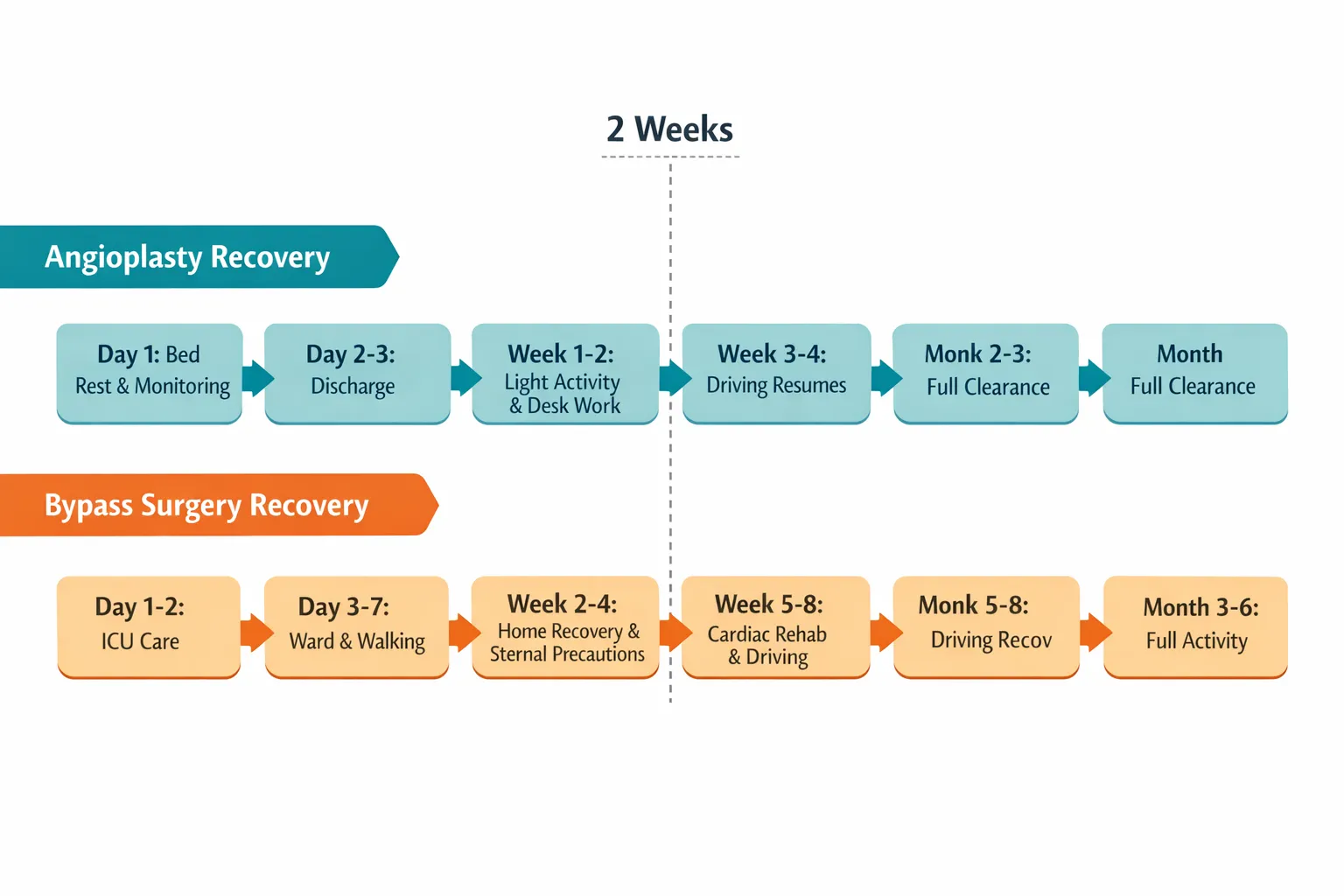
Recovery timelines are something most websites handle poorly. They give you a vague range and move on. Here is a practical, week-by-week guide for each procedure.
After Angioplasty
• Day 1: Bed rest. The catheter insertion site (wrist or groin) is monitored for bleeding. Overnight observation in most cases.
• Day 2 to 3: Discharge. Light walking around the house. Avoid lifting anything heavier than 5 kg.
• Week 1 to 2: Resume desk work if you feel up to it. Short walks daily. Start dual antiplatelet medication as prescribed.
• Week 3 to 4: Driving usually allowed (if wrist access was used). Gradual return to normal routines.
• Month 2 to 3: Follow-up stress test. Cardiac rehabilitation if advised. Full activity clearance from your cardiologist.
After Bypass Surgery
• Day 1 to 2: ICU. Ventilator support initially, then weaning. Chest tubes monitored and removed.
• Day 3 to 7: Move to general ward. Deep breathing exercises to prevent lung complications. Short supervised walks in the hospital corridor.
• Week 2 to 4: Home recovery. Strict sternal precautions: no pushing, pulling, or lifting more than 2 kg. Wound care. Walking distance increases gradually.
• Week 5 to 8: Cardiac rehabilitation begins. Driving may resume after 6 weeks if your surgeon confirms the sternum has healed.
• Month 3 to 6: Return to work (desk jobs earlier, physical jobs later). Full exercise clearance around month 3 to 4.
This is where things get nuanced. A 2023 systematic review of clinical studies found no statistically significant difference in survival between PCI and CABG at the 10-year mark. So neither procedure gives you a clear survival advantage over the other in the long run.
However, durability differs. According to Indian clinical data, 15 to 20 percent of angioplasty patients face artery re-narrowing within a few years and may eventually need bypass surgery. On the other hand, bypass grafts using the mammary artery can last a lifetime, while vein grafts start to fail in about half of patients after 8 to 10 years.
The bottom line: neither procedure is a permanent cure. Both are interventions that restore blood flow. Their long-term success depends heavily on whether you commit to medication, regular checkups, and lifestyle changes after the procedure.
Your Emotions Will Need Recovery Too
Post-procedure anxiety and depression are far more common than people realize. The fear of another heart event, frustration with physical limitations, and mood swings from medication can catch patients and caregivers off guard. Do not brush this off. If you or your family member feels persistently low or anxious after the procedure, talk to your cardiologist about cardiac rehabilitation programs that include counseling support.
Indian-Specific Diet Advice (Not Generic "Eat Healthy" Fluff)
• Reduce ghee, coconut oil, and deep-fried snacks. Switch to mustard oil or olive oil for cooking.
• Watch your salt intake, especially from pickles, papads, and packaged snacks.
• Festival eating is a real challenge. One plate of Diwali sweets or a generous serving of biryani at a wedding will not end you, but make it the exception, not the weekly habit.
• Get your protein from dal, paneer, eggs, and fish rather than red meat.
• Walk daily. If you live in Hyderabad, KBR Park, Durgam Cheruvu, and Necklace Road are excellent options. Aim for 150 minutes per week of moderate activity.
And one myth that needs to die: "bypass surgery means I can never eat rice again." That is not true. Portion control and pairing rice with fiber-rich vegetables is what matters, not eliminating it entirely.
India is sitting on a cardiovascular crisis. A 2025 systematic review published in MDPI found that the pooled prevalence of CVD among Indian adults is now 11 percent, with urban areas significantly worse than rural. A separate 2024 review in Cureus noted that coronary artery disease prevalence in urban India has jumped from 1 to 2 percent in the 1960s to 10 to 12 percent today.
According to the WHO India, CVDs accounted for 27 percent of all deaths in India, with 45 percent of those deaths occurring in the 40 to 69 age group. And as the American Heart Association's Circulation journal points out, Indians develop heart disease a full decade earlier than people in Western countries.
These are not just numbers. They mean that the decision between angioplasty and bypass surgery is one that more Indian families face, and face younger, than almost any other population on earth. Getting it right matters.
Ready to get a clear answer about your treatment options? Book a cardiology consultation at Germanten Hospital today.
Remember Ramesh from the beginning of this article? He ended up having bypass surgery. His SYNTAX score was high. He had three-vessel disease and early-stage diabetes. A Heart Team reviewed his case, weighed the risks, and recommended CABG. Six months later, he was back walking at KBR Park.
But here is the thing: his neighbor, Suresh, had a single blockage, a low SYNTAX score, and no diabetes. He got a stent through angioplasty and was back at his desk in a week. Both made the right call, because the right call was different for each of them.
If you are facing this decision in Hyderabad, the best thing you can do is get a thorough evaluation from a qualified cardiology team that uses evidence-based tools like the SYNTAX score and follows the Heart Team model. At Germanten Hospital, the cardiology department, led by Dr. Wasif Azam and equipped with a state-of-the-art dual-tube cathlab, follows exactly this protocol, so your treatment plan is shaped by collaboration, not guesswork.
So here is the question worth sitting with: if you or a loved one has been told about a heart blockage, have you asked your cardiologist for your SYNTAX score? Have you asked whether a Heart Team reviewed your case? Those two questions could change your outcome.
To schedule a cardiology consultation, visit the Germanten Hospital or call +91 9000909073.
Is angioplasty considered major surgery?
No. Angioplasty is a minimally invasive procedure done under local anesthesia. You are awake during the entire process and can usually go home within a day or two.
Can angioplasty fail and need bypass later?
Yes. An Indian estimate suggests that 15 to 20 percent of patients who undergo angioplasty may face artery re-narrowing within a few years and eventually require bypass surgery.
Is bypass surgery covered under Ayushman Bharat?
Yes. Both angioplasty and coronary artery bypass grafting are covered under PMJAY with up to INR 5 lakh in coverage per family per year at empanelled hospitals.
What is the SYNTAX score?
The SYNTAX score is a clinical tool that rates the complexity of your coronary artery blockages based on your angiogram. A low score (under 22) often favors angioplasty; a high score (above 33) generally points toward bypass surgery.
How long does it take to fully recover from bypass surgery?
Most patients need 6 to 12 weeks for full recovery. Desk workers may return to work in 6 to 8 weeks. Physical laborers or those with complications may need up to 3 months.
Which is safer for diabetic patients?
For patients with diabetes and multi-vessel disease, bypass surgery generally delivers better outcomes. Harvard Health confirms that the evidence strongly favors CABG in diabetic patients with complex coronary disease.
How do I choose the right hospital for heart surgery in Hyderabad?
Look for NABH accreditation, experienced interventional cardiologists and cardiac surgeons, a modern catheterization lab, and a hospital that follows the Heart Team approach for complex cases. Ask whether they discuss your SYNTAX score with you and involve you in the decision.