Heart Block and Hole in Heart: Causes, Symptoms, Diagnosis and Treatment
Aug 20, 2026

Rajan was 42 years old, worked a desk job in Hyderabad's financial district, and considered himself reasonably healthy. He jogged three days a week and mostly avoided fried food. But he kept feeling slightly short of breath climbing the four flights of stairs to his office. He told himself it was just the Hyderabad summer heat. The occasional tightening in his chest lasted only seconds, so he ignored it too.
That was in March. By June, Rajan was in the cardiac ICU, recovering from a massive heart attack at 42 years of age.
Here is the part that gets overlooked: Rajan had a general physician appointment scheduled two weeks before his hospitalization. He cancelled it for a work deadline. He had no cardiologist. He did not know he needed one. And he had no idea what questions to ask even if he had gone.
If you are searching for the best cardiologist in Hyderabad, start with the reason you need care: chest pain, high blood pressure, palpitations, diabetes-related heart risk, breathlessness or a second opinion. Look for a qualified cardiologist with strong clinical experience, advanced diagnostic support, Cathlab access, emergency cardiac care, clear communication and structured follow-up.
For many patients, the right heart specialist is not just a famous name. It is the doctor and hospital team that can diagnose early, explain options clearly and act quickly during emergencies.
Rajan's story is not unusual in Hyderabad. According to the Indian Heart Association, 50% of all heart attacks in Indian men occur under the age of 50, and 25% happen before 40. Hyderabad already carries India's highest diabetes burden, which is a major cardiac trigger, and the numbers are getting worse, not better.
Whether you have been referred to a cardiologist already, or you are doing the smart thing by planning ahead, this guide will walk you through what to look for, what most people miss, and 15 specific questions you should bring to your very first cardiology visit.
A cardiologist is a doctor who specializes in diagnosing, treating, and preventing conditions of the heart and blood vessels. But not every cardiologist treats the same problems and that difference matters more than most people realize.
Most people think heart disease is a problem for people in their 60s or those who eat poorly. The data tells a much harder story. A 2025 meta-analysis published in MDPI covering research from 2000 to 2024 found the pooled CVD prevalence in India at 11% nationally, rising to 12% in urban areas like Hyderabad, compared to just 6% in rural India.
According to Circulation, the journal of the American Heart Association, while only 23% of CVD deaths in Western populations happen before age 70, in India that number is 52%. More than half of all cardiac deaths in India happen to people still in their working years.
Add Hyderabad's diabetes burden, sedentary IT-sector lifestyles, late eating habits, and rising stress levels, and you have a city where cardiac care in Hyderabad is not a senior citizen topic. It is a priority for every adult over 30.
The WHO India cardiovascular health page estimates global CVD deaths at 19.8 million lives each year. More than four out of five of those deaths come from heart attacks and strokes, and one third happen to people under 70.

Here is the surprising truth that almost no blog in Hyderabad mentions: cardiology has multiple sub-specialties. Seeing the wrong type of cardiologist can delay your correct diagnosis by months.
Most 'best cardiologist in Hyderabad' articles just give you a name list. None of them explain this:
When your general physician refers you to 'a cardiologist,' always ask: is this the right sub-type for my specific concern? That one question alone can save you weeks of unnecessary waiting and repeat tests.
Many patients search for the best heart specialist in Hyderabad, but the correct medical term is cardiologist. A cardiologist is a doctor who diagnoses, treats, and helps prevent diseases of the heart and blood vessels.
A general cardiologist usually manages high blood pressure, cholesterol, chest discomfort, preventive heart checks, and ongoing heart care. An interventional cardiologist focuses on procedures such as coronary angiography, angioplasty, and stenting. This is why the “best” cardiologist for one patient may not be the right specialist for another patient. Your symptoms should guide the choice.
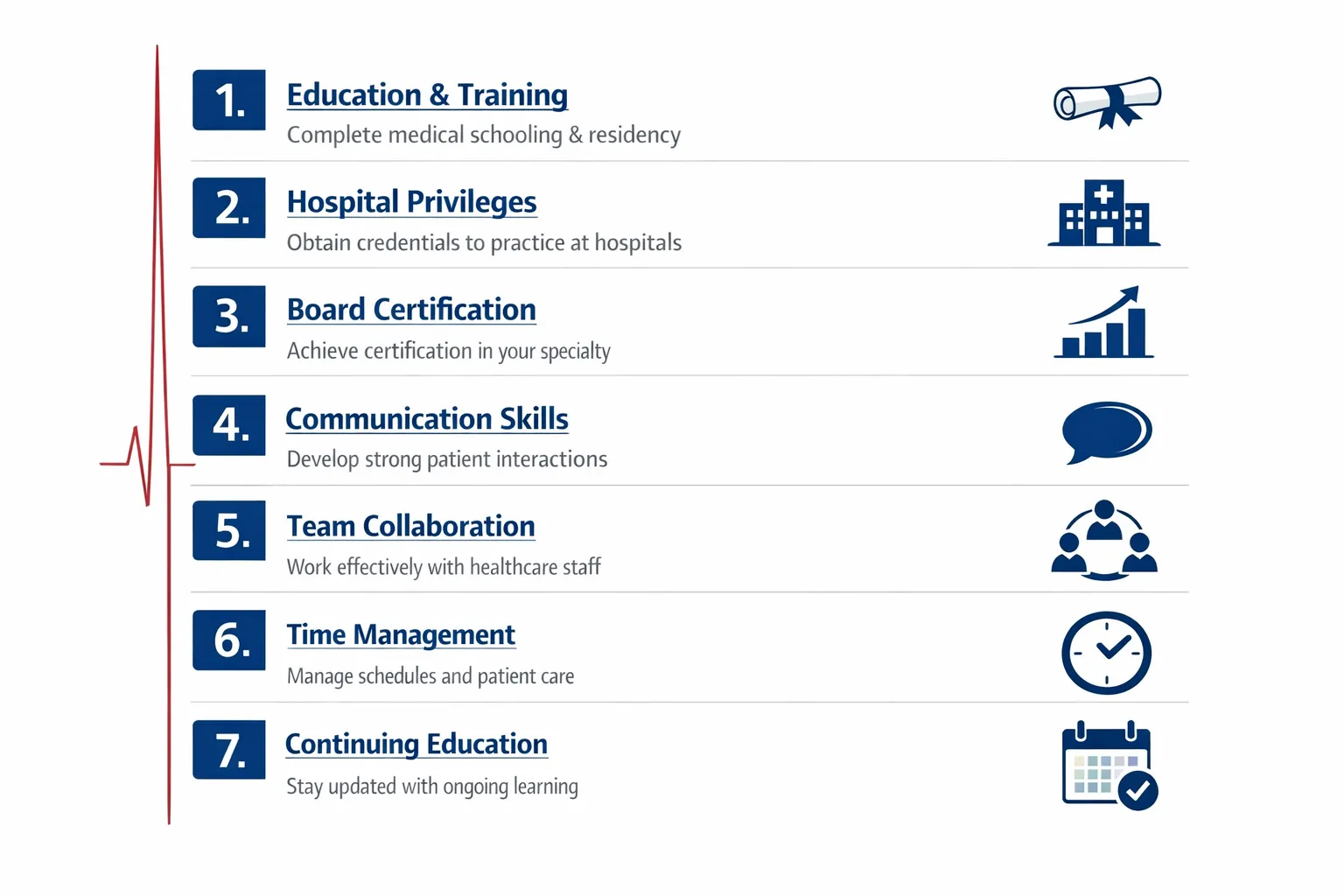
A cardiologist in India should hold at minimum an MD plus DM (Cardiology). But look further. International designations like FESC, FACC, and FSCAI show ongoing recognition by global peers, not just a one-time qualification. A fellowship in a specific procedure area (like interventional cardiology or electrophysiology) matters more than total years of experience alone.
What most people do not realize is that a cardiologist is only as capable as the hospital they work in. The equipment available directly shapes the quality of your diagnosis and your treatment.
When evaluating heart treatment in Hyderabad, look for facilities that have:
• Dual Tube Cathlab for angioplasty and complex coronary procedures
• 24/7 Cardiac ICU with continuous monitoring
• Advanced echocardiography, cardiac CT, and cardiac MRI capability
• Integrated support from nephrologists, diabetologists, and physiotherapists
High-volume interventional cardiologists have statistically better outcomes in procedures like stenting and angioplasty. Ask directly: how many procedures like yours has this cardiologist personally performed? A good doctor will not hesitate to answer.
The best cardiac specialist in Hyderabad should explain your condition in plain terms, not just hand you a prescription and send you home. As Mass General Brigham cardiologist Dr. Fidencio Saldana notes, when you leave an appointment, you should have a clear understanding of what the visit was for, what the diagnosis is, and what the plan is going forward.
Cardiac conditions in Hyderabad rarely come alone. Most patients also carry diabetes, kidney stress, or obesity. Your cardiologist should be part of a larger care team, not a solo practitioner. Ask whether the hospital connects cardiology with nephrology, endocrinology, and nutrition under one roof.
Ask this one direct question: if you have a cardiac event at 2 AM on a Sunday, what happens? A hospital with 24/7 Cathlab access and a clear emergency cardiac protocol is not a luxury. It is the baseline for serious cardiac care.
The best cardiac care in Hyderabad does not stop when you leave the consultation room. Ask whether the doctor runs a scheduled follow-up system, whether you can reach the team between visits, and whether there is a clear escalation plan if your symptoms change.
No competitor blog in Hyderabad covers this, but it is one of the most practically useful things to know.
•They skip your previous reports and start fresh every visit without reviewing what has already been tested.
•They prescribe medication without explaining what it does, why it is needed, or what side effects to expect.
•They discourage second opinions. Any confident, ethical cardiologist welcomes them.
•There is no follow-up plan after your diagnosis. Good cardiac care is never a one-visit conclusion.
•They order repeat tests without clear clinical reasoning tied to your specific case.
•They do not coordinate with your other doctors, such as your diabetologist or nephrologist, even when your conditions overlap.
•No emergency protocol exists. You should always know who to call and at what hour if your symptoms get worse.
If more than two of these apply after your visit, seek a second opinion without hesitation. Your heart deserves that standard of care.
According to Ohio State University Wexner Medical Center, walking into your first cardiology appointment prepared is one of the single most valuable things you can do. Here is your checklist:
• All current medications with name, dose, and how often you take them
• Previous ECG, echo, TMT, or angiogram reports, even if they are from several years ago
• Recent blood test results: lipid profile, HbA1c, kidney function, liver panel
• Your blood pressure readings from the past 2 to 4 weeks if you monitor at home
• Family heart history covering parents, siblings, and grandparents
• A clear list of your symptoms: when they started, what triggers them, and what makes them better or worse
• Insurance documents and your TPA or corporate health policy details
• A written list of your questions, which brings us to the core section of this guide
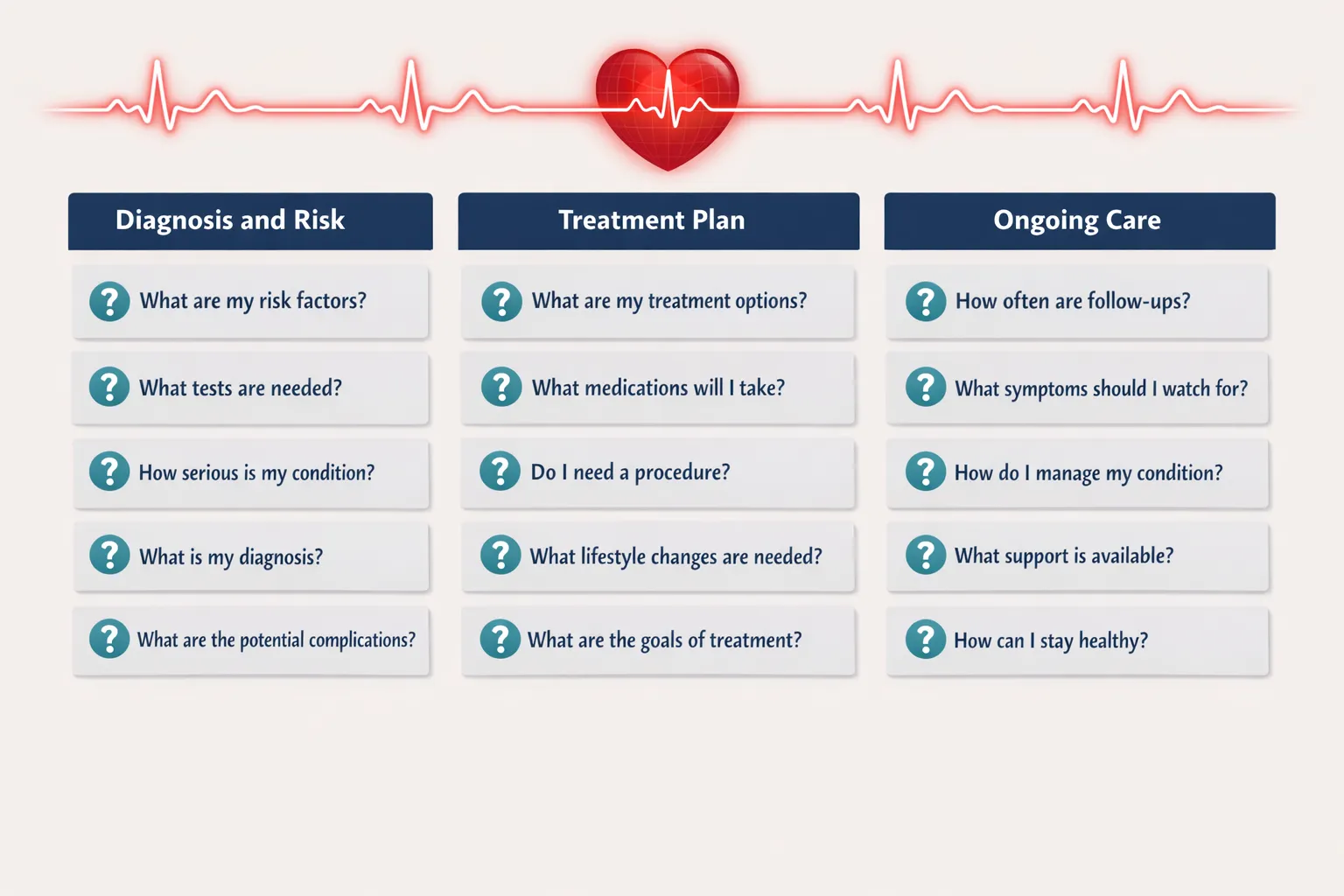
Most patients walk out of a cardiology appointment remembering only a fraction of what was said. These 15 questions change that and put you in real control of your cardiac care.
1. What exactly is wrong with my heart, and how serious is it? Ask your doctor to explain in plain language. If they use medical terms, ask them to translate. Understanding your own condition is not optional.
2. What is my overall cardiovascular risk score, and what does it mean for me? Cardiologists use tools like the Framingham Risk Score to estimate your 10-year heart risk. Ask for your number and what it means for daily life.
3. How does my diabetes, high blood pressure, or family history specifically affect my heart? These three are the most common overlapping risks for Hyderabad patients. Ask for a specific answer related to your case, not a general one.
4. Are there other conditions I have that could be causing or worsening my heart problem? Thyroid issues, sleep apnea, kidney disease, and obesity all affect the heart. Ask if any of your other conditions are relevant to your cardiac picture.
5. Do I need additional tests before you can confirm a diagnosis? Understand why each test is being ordered and what clinical decision will be made based on the results.
6. What are all my treatment options? Ask whether medication, a procedure, or lifestyle changes are on the table, and what the tradeoffs of each are. Do not accept a single-path answer without understanding the alternatives.
7. If you are prescribing medication, what does it do and what are the side effects? Know exactly what you are taking and how it may interact with other medications or supplements you already use.
8. How will I know if this treatment is working? Ask for specific measurable markers such as a blood pressure target, a cholesterol level to reach, or a follow-up echocardiogram timeline.
9. How many procedures like mine have you personally performed? This matters most for interventional steps like angioplasty, stenting, or ablation. Volume and precision are directly linked in cardiac procedures.
10. What happens if I choose not to pursue the recommended treatment? Understanding the consequence of inaction is as important as understanding the treatment itself.
11. What specific lifestyle changes will make the biggest difference for my condition? You need tailored advice for your diagnosis, not a generic 'eat less salt' response.
12. What are my exact target numbers for blood pressure, cholesterol, and blood sugar? Write these down at the appointment. These are your personal health benchmarks and knowing them changes how you approach every day.
13. Is my work pressure or daily stress actively making my heart condition worse? Stress is a documented cardiac risk factor, especially in Hyderabad's IT and professional culture. Ask your cardiologist to assess it directly.
14. How often should I come back, and what tests will be repeated at each visit? A structured follow-up plan is the difference between proactive cardiac management and waiting for a crisis.
15. Who do I contact and at what time if my symptoms get worse between appointments? Get a direct protocol. Cardiac emergencies do not follow business hours, and you need to know exactly what to do before one happens.
Walking into a cardiologist's office for the first time can feel stressful. Here is what typically happens so you are not caught off guard:
•Medical history review: Your cardiologist will ask about your symptoms, family history, current medications, and daily habits.
•Physical examination: This includes checking blood pressure, pulse, weight, and listening to your heart and lungs with a stethoscope.
•Basic diagnostics: An ECG is almost always done during the first visit. Blood tests or an echocardiogram may also be arranged the same day.
•Initial findings and a plan: Your doctor will share what they observe and outline the next steps, whether that is more tests, medication, or a follow-up schedule.
If you leave the first appointment without a clear diagnosis or a stated plan, that is a signal to ask more questions or consider a second opinion before moving forward.
If you are looking for heart treatment in Hyderabad backed by advanced infrastructure and a coordinated care team, Germanten Hospital's cardiology department is led by Dr. Mohammed Wasif Azam, a consultant cardiologist with deep experience in complex cardiac conditions.
The unit is built around a state-of-the-art Dual Tube Cathlab for Angioplasty, Coronary Angiography, and Stenting. What makes it especially suited for Hyderabad's patient profile is the integrated team model: cardiologists, nephrologists, nutritionists, and physiotherapists all working together under one roof. For patients managing both diabetes and heart disease, which is extremely common in Hyderabad, this coordinated approach makes a tangible difference in long-term outcomes.
The hospital holds NABH accreditation, a quality standard that is independently verified rather than self-declared.
The cardiologist who treated Rajan post-discharge told him something that stayed with him: 'If you had come to me three months earlier, even with just those few symptoms, we could have caught this without the ICU.'
The best cardiologist in Hyderabad is not necessarily the most famous name on a hospital website. It is the one who listens carefully, explains your condition in terms you can act on, builds a plan with you rather than for you, and answers the questions you did not even know to ask.
You now know the 7 things to look for, the red flags to avoid, what to bring to your first visit, and 15 questions that give you real control over your cardiac care journey. The next step is yours to take.
What is the one symptom you have been putting off checking? Is it time to stop brushing it aside and start getting real answers?
All statistics cited in this article are sourced from peer-reviewed journals, government health bodies, and internationally recognized medical institutions.
1. Indian Heart Association: Why Indians, Why South Asians
2. MDPI / IJERPH: Prevalence of CVD Among Indian Adult Population (2025)
3. Circulation, American Heart Association: Cardiovascular Diseases in India
4. WHO India: Cardiovascular Diseases
5. PMC / NIH: Rising Burden of CVD and Thrombosis in India (2024)
6. Mass General Brigham: First Cardiologist Appointment: What to Expect
7. Ohio State Wexner Medical Center: Questions for First Cardiology Visit
8. Wiley Online Library: CVD Among Indian Older Adults: Comprehensive Review (2024)
The best cardiologist in Hyderabad should be chosen based on qualification, experience, area of specialization, hospital infrastructure, emergency access, and communication style. Patients should avoid choosing only by popularity or online lists.
A heart specialist is called a cardiologist. A cardiologist diagnoses and treats heart and blood vessel conditions such as chest pain, high blood pressure, heart rhythm problems, blocked arteries, and heart failure.
If chest pain is linked to blocked arteries, angiography, stenting, or angioplasty, an interventional cardiologist is usually the right specialist. Sudden or severe chest pain should be treated as an emergency.
You should visit a cardiologist if you have chest discomfort, breathlessness, palpitations, unexplained fatigue, high blood pressure, diabetes, high cholesterol, swelling in the legs, or a strong family history of heart disease.
Ask about your diagnosis, risk score, required tests, treatment options, medicine side effects, target BP/cholesterol/sugar numbers, warning signs, follow-up schedule, and emergency contact protocol.
A general cardiologist focuses on diagnosis, prevention, medical management, and long-term heart care. An interventional cardiologist performs catheter-based procedures such as angiography, angioplasty, and stenting.
Yes. Germanten Hospital, Attapur has a cardiology department offering cardiac evaluation, diagnostic tests, emergency cardiac support, cardiac rehabilitation, and interventional cardiac procedures.