10 Massages and Stretches for a Frozen Shoulder
June 15, 2023
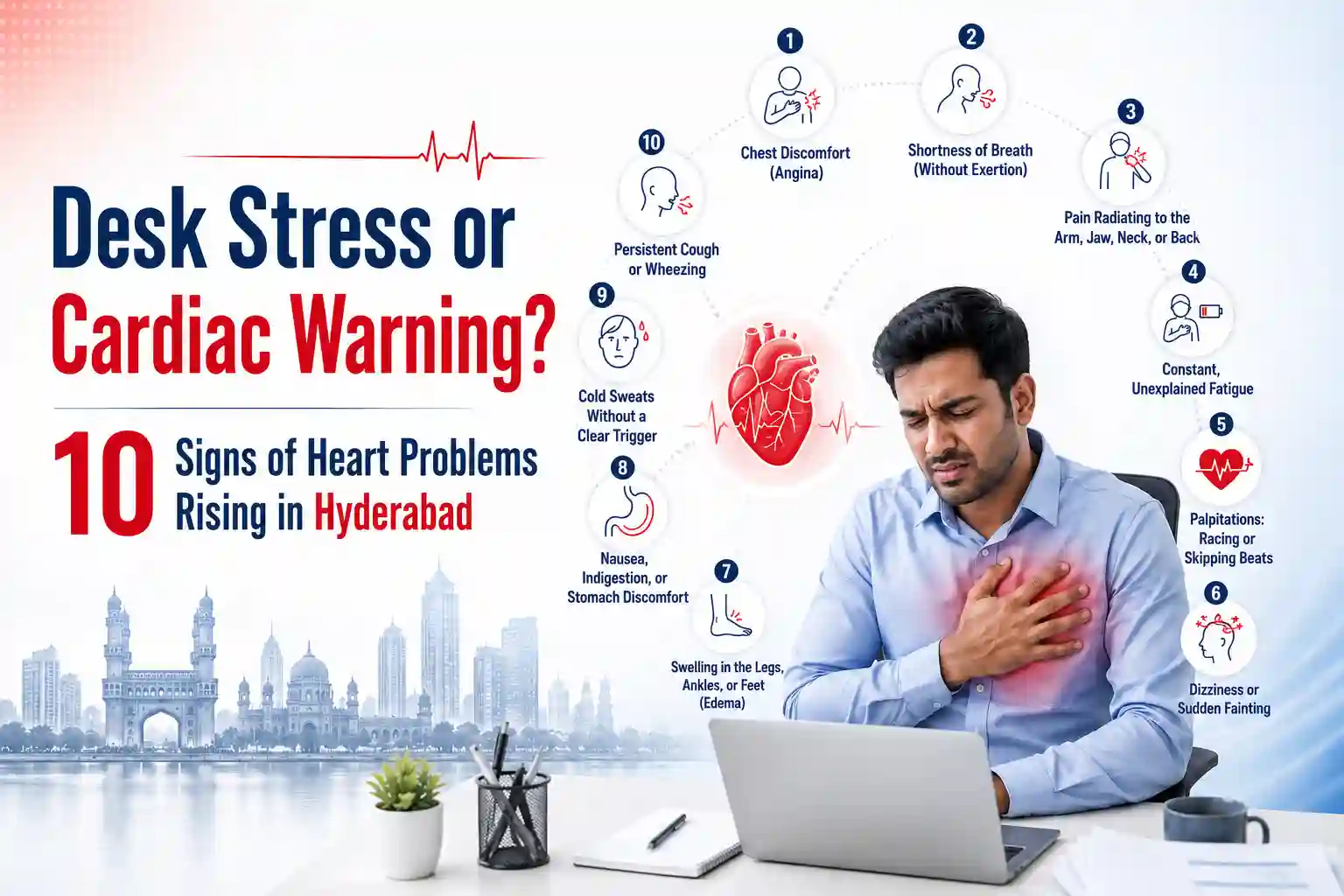
Do you frequently feel a tight sensation in your chest after rushing up the stairs at your office, or experience inexplicable breathlessness after walking across a massive parking lot in Hitech City? These are signals your body is sending that demand your immediate attention.
In Hyderabad's fast-paced corporate sectors from Gachibowli to Madhapur extended desk hours, heavy caffeine dependency, and high stress are often worn like badges of honor. However, this sedentary lifestyle frequently masks serious cardiovascular risks. Heart disease doesn't always announce itself with a dramatic collapse; more often, heart problem symptoms are casually dismissed as simple work fatigue, acidity from late-night takeout, or panic attacks.
If you are experiencing unexplained chest discomfort or chronic exhaustion, do not try to "push through it." Consulting an experienced Cardiologist in Hyderabad for an early screening is the most proactive step you can take for your long-term health.
Let me explain the specific signs of heart problems that I frequently see in young professionals across the city, what these symptoms actually mean, and when you need to seek immediate medical care.
Before we dive into the symptoms, we need to address why these cardiac issues are rising among people in their 30s and 40s. The modern 9-to-5 (which is often a 9-to-9) creates a perfect storm for cardiovascular strain:
When your heart is under this much stress, it begins to send out distress signals. Here are the 10 warnings you must never ignore.
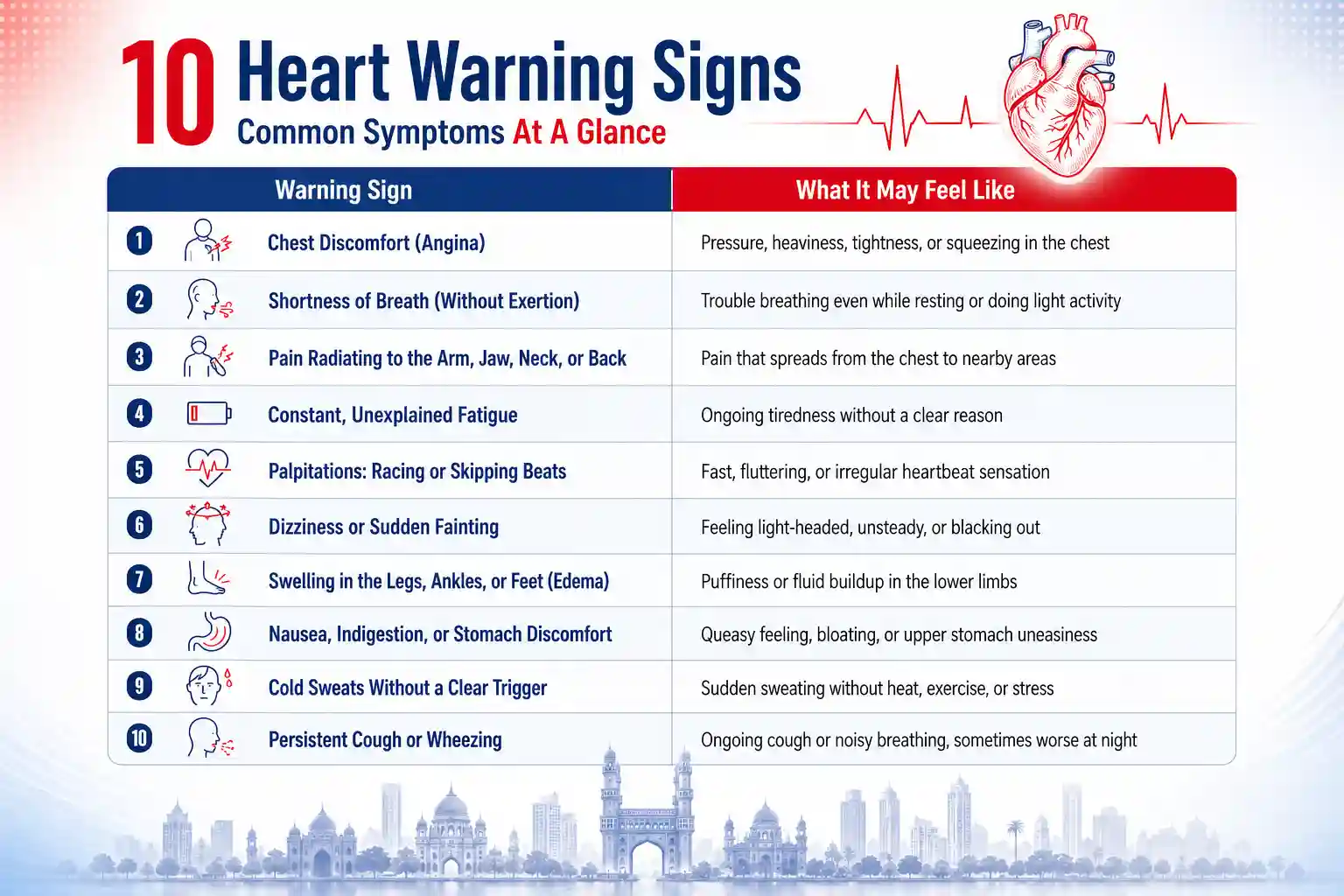
Many patients report a squeezing, heavy, or burning sensation in the center or left side of the chest. It may last for a few minutes or come and go. While chest discomfort is the most recognized sign of a heart attack, corporate workers often mistakenly dismiss it as muscle strain from poor posture. If this pressure feels like a tight band around your chest and spreads to your shoulder for more than 5 minutes, call emergency services immediately.
If walking to the office cafeteria or carrying your laptop bag leaves you completely winded, take note. Shortness of breath without a respiratory cause (like asthma) occurs when the heart struggles to pump blood efficiently, causing fluid to back up into the lungs. Waking up gasping for air at night, a condition known as paroxysmal nocturnal dyspnea is a major red flag.
Radiating pain happens because the heart and surrounding structures share the same nervous pathways. It is a critical heart disease symptom when chest discomfort is combined with aching in the left arm, throat, or jaw. I have seen many patients visit a dentist for unexplained jaw pain, only to discover later that they were experiencing a cardiac event.
Feeling tired after a 12-hour coding sprint is normal. Feeling so exhausted that taking a shower or walking to your kitchen feels impossible is not. Chronic, crushing fatigue is often one of the first signs of weak heart function. When the heart cannot pump enough blood to meet the body’s needs, less oxygen reaches your muscles and organs. Do not automatically blame this on anemia or poor sleep without ruling out your heart.
Heart palpitations feel like a sudden racing, fluttering, or pounding in your chest. While strong coffee or a tight deadline can trigger temporary flutters, frequent or prolonged palpitations indicate a problem. They can point to arrhythmias such as atrial fibrillation (AF), a condition that significantly raises your risk of a stroke.
Experiencing a spinning sensation, sudden faintness, or brief loss of consciousness (syncope) happens when reduced cardiac output temporarily drops blood flow to the brain. According to global health guidelines, unexplained fainting is widely recognized as one of the 5 warning signs of heart disease that require emergency evaluation. Do not dismiss repeated dizziness as mere dehydration or low blood sugar.
Sitting at a desk all day can cause mild swelling, but if you notice deep puffiness or pitting edema around your ankles that leaves indentations when pressed, your heart may be struggling. When the right side of the heart weakens, blood flow backs up in the veins, causing fluid to leak into surrounding tissues.
Because the vagus nerve connects the heart and the digestive system, a cardiac event can trigger severe gastrointestinal distress. Many patients describe the early stages of a heart attack as severe indigestion or bloating. If you have persistent heartburn that isn't relieved by antacids especially if accompanied by sweating seek immediate medical evaluation.
Breaking into a sudden cold sweat without physical exertion or fever is a classic indicator of a heart attack in progress. This happens due to the body’s "fight or flight" autonomic nervous system responding to cardiac distress. If a cold sweat appears suddenly alongside chest tightness, treat it as an absolute emergency.
A chronic cough producing white or pinkish frothy mucus that lingers without a respiratory infection can be an unexpected sign of congestive heart failure. When the heart fails to pump efficiently, fluid accumulates in the lungs. This is frequently misdiagnosed as severe allergies or a lingering cold.
Because panic attacks and cardiac events share similar symptoms, distinguishing between the two is crucial for Hyderabad's high-stress workforce.
Disclaimer: Never attempt to self-diagnose based on a table. If in doubt, visit an emergency room.
Research consistently shows that women experience cardiac events differently than men. The classic "elephant sitting on the chest" presentation is less common. Instead, heart problem symptoms in women frequently present as:
Because these symptoms are so subtle, women are significantly more likely to be misdiagnosed or delayed in receiving care. If you are a woman experiencing these unusual physical sensations, insist on a thorough cardiac evaluation.
When you visit a cardiologist, we don't just guess; we use precise diagnostics to map your cardiovascular health. A comprehensive cardiac evaluation typically includes:
For professionals living or working near Attapur, Rajendra Nagar, Tolichowki, Mehdipatnam, and Hitech City, waiting for an emergency to prioritize your heart is a dangerous gamble.
At Germanten Hospitals, we take a preventative, team-based approach to cardiovascular health. We don't just treat heart attacks; we work with you to manage blood pressure, reverse early arterial stiffness, and optimize your lifestyle so those symptoms never escalate. From advanced 24-hour Holter monitoring to a fully equipped modern Cath Lab for interventional procedures, we provide end-to-end cardiac care.
Don't wait for your desk stress to become a cardiac warning.
If you are experiencing any of the symptoms discussed today, take control of your health.
Book a Consultation with Our Cardiology Department Today
Q1: What are the most common heart problem symptoms ignored by young corporate workers in Hyderabad?
While chest pain is recognizable, young professionals frequently ignore extreme fatigue, unexplained shortness of breath after minor tasks, and persistent jaw or upper back tension. These are often wrongly attributed to long working hours and poor desk posture.
Q2: What are the first signs of a weak heart?
Early signs of a weakening heart (heart failure) include a noticeable drop in physical stamina, waking up breathless at night, and fluid retention (swelling) around the ankles that worsens by the evening.
Q3: When should I bypass a general physician and see a cardiologist in Hyderabad?
If you have a family history of heart disease, lead a high-stress lifestyle, or experience recurring symptoms like palpitations, radiating chest pressure, or fainting, you should consult a cardiology specialist directly for targeted diagnostic testing like a 2D Echo or TMT.
Q4: Can gastric problems mimic heart disease symptoms?
Yes. Because the digestive system and heart share nerve pathways, acid reflux and cardiac ischemia can feel remarkably similar. However, if your "indigestion" is accompanied by cold sweats, dizziness, or shortness of breath, treat it as a cardiac emergency.
References