10 Massages and Stretches for a Frozen Shoulder
June 15, 2023
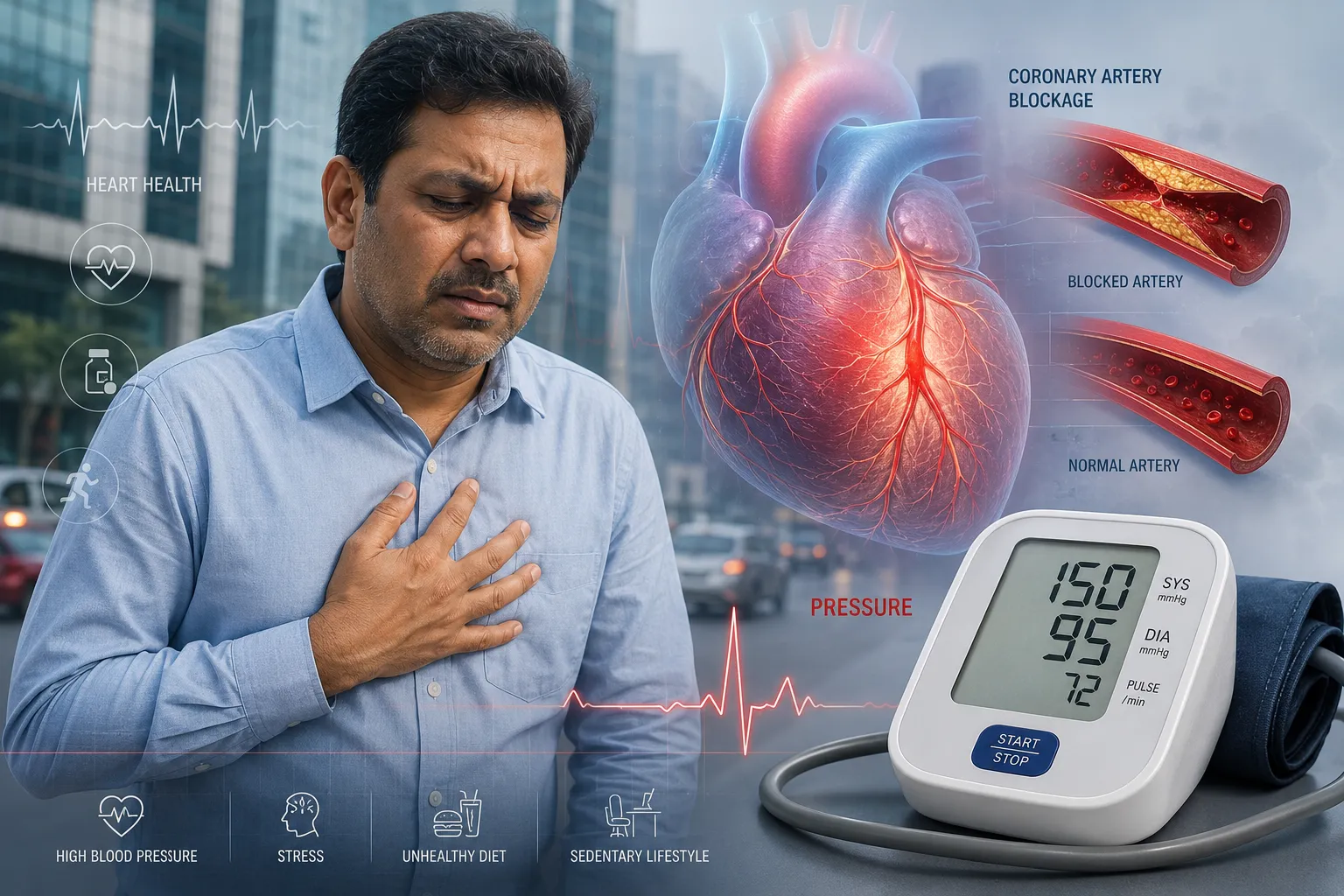
If you have been told your blood pressure is high, you might have nodded, taken the prescription, and not thought much more about it. Many of my patients in Hyderabad do exactly that. But here is what I want you to understand clearly: uncontrolled high blood pressure is one of the most serious silent threats to your heart, and it is extremely common in cities like ours.
Let me explain the connection between hypertension and heart disease in plain language, tell you what the risks really look like, and help you understand what you can actually do about it. Whether you are managing blood pressure right now or just want to be informed, this conversation is for you.
Blood pressure is simply the force your blood exerts against the walls of your arteries as your heart pumps. It is measured in two numbers: the systolic pressure (when the heart beats) over the diastolic pressure (when the heart rests between beats). A normal reading is around 120/80 mmHg.
When those numbers stay consistently above 130/80 mmHg, we call it hypertension. The problem is that it rarely causes obvious symptoms. No pain, no dizziness in most cases, no warning siren. That is why it earned the nickname “the silent killer.”
Table 1: Blood Pressure Classification and Recommended Action (AHA/ACC 2023 Guidelines)
This is the part most patients do not fully understand, and it is the most important piece of this conversation. When your blood pressure is persistently high, it puts constant mechanical stress on your arteries and heart. Think of it like water flowing through a garden hose under too much pressure. Over time, the hose walls weaken, bulge, or crack.
Here is specifically what happens to the heart:
•The heart muscle thickens: To pump against higher resistance, the left ventricle of the heart has to work harder. Over time, this causes the muscle wall to thicken, a condition called left ventricular hypertrophy. A thickened heart is stiffer and pumps less efficiently.
•Arteries harden and narrow: High pressure damages the inner lining of arteries, making them more prone to plaque buildup. This is called atherosclerosis, and it reduces blood flow to the heart itself, causing coronary artery disease.
•Risk of heart attack increases: When narrowed coronary arteries get blocked, the heart muscle is starved of oxygen. That is a heart attack. Hypertension is a direct and major contributor.
•Heart failure develops: A heart that is overworked for years eventually weakens. It cannot pump enough blood to meet the body's needs, leading to heart failure with all its symptoms: breathlessness, fatigue, and swelling.
•Atrial fibrillation becomes more likely: High BP changes the structure of the heart's electrical system, making irregular heartbeats far more common. Atrial fibrillation significantly raises the risk of stroke.
You might wonder why I specifically mention Hyderabad. The truth is that cardiovascular risk in Indian urban populations, including cities like ours, has been rising significantly. Several large-scale studies and national health surveys have shown that hypertension affects over 30 percent of adults in Indian cities, and a significant number of those affected are either undiagnosed or inadequately treated.
Hyderabad presents a particular combination of risk factors:
•High consumption of sodium-rich foods including pickles, processed snacks, and restaurant meals
•Sedentary work culture, especially in the IT and services sectors
•High psychological stress levels from professional and urban life
•Increasing rates of type 2 diabetes, which compounds cardiovascular risk
•Low rates of regular physical activity, especially among working adults
Patients from areas like Attapur, Mehdipatnam, Tolichowki, and Rajendra Nagar frequently come to us after discovering their blood pressure is much higher than they expected. The good news is that with the right approach, it is very manageable.
High blood pressure does not affect everyone equally. Certain factors increase your risk significantly. Here is a clear summary:
Table 2: Risk Factors for Hypertension and Their Modifiability
If you have three or more of these factors, a visit to a high BP cardiologist in Hyderabad is not something to put off. Even if you feel fine right now, your arteries may not be.
Let me share some figures that I think every patient deserves to know. These numbers come from well-established global and Indian research:
Table 3: Key Statistics on Hypertension and Cardiovascular Risk (WHO, ICMR, AHA Sources)
That last number is what concerns me most as a clinician: so many patients are on medication but not reaching their target blood pressure. The medication alone is not enough if it is not the right one, or if the dose needs adjustment, or if lifestyle factors are working against it.
Diagnosing high blood pressure is straightforward. Two or more readings above the threshold on separate visits is enough to confirm the diagnosis. But a good cardiologist does not stop at the diagnosis. We want to understand the full picture of your cardiovascular risk.
Here is what a thorough cardiac evaluation for a hypertension patient typically includes:
• Blood pressure measurement in both arms on multiple visits
• ECG to check for left ventricular hypertrophy or arrhythmias
• Echocardiogram to assess heart muscle thickness and function
• Blood tests: kidney function, blood glucose, lipid profile, electrolytes
• Urine test to check for protein (indicates kidney involvement)
• Fundoscopy (eye examination) to assess blood vessel changes
• 24-hour ambulatory blood pressure monitoring if readings are inconsistent
This comprehensive approach helps us understand whether your heart, kidneys, brain, and blood vessels are already being affected, and how aggressively we need to treat.
A common misconception is that hypertension treatment means taking a tablet every morning and calling it done. In reality, managing high blood pressure well requires a combination of approaches, and the lifestyle component is often underestimated.
• Dietary changes: Reduce salt intake to less than 5 grams per day. The DASH diet (rich in fruits, vegetables, whole grains, low-fat dairy) has strong evidence for lowering blood pressure. Reduce pickles, papads, processed foods, and restaurant meals.
• Physical activity: At least 150 minutes of moderate exercise per week, such as brisk walking, swimming, or cycling. Even 30 minutes daily makes a measurable difference.
• Weight management: Each kilogram of weight loss can reduce systolic BP by approximately 1 mmHg. For someone who is 10 kg overweight, meaningful BP reduction is achievable through weight loss alone.
• Alcohol reduction: Limit to no more than one drink per day for women and two for men. Excess alcohol is a direct cause of raised BP.
• Smoking cessation: Smoking damages arterial walls and raises BP acutely with each cigarette. Quitting is one of the most impactful cardiovascular decisions anyone can make.
• Stress management: Yoga, meditation, and adequate sleep (7 to 8 hours) have all shown benefit in BP reduction. Chronic stress is a genuine contributor to sustained hypertension.
When lifestyle changes alone are not sufficient, which is often the case in Stage 2 hypertension or when there are other risk factors, medication becomes necessary. There are several effective classes of antihypertensive drugs, and the right choice depends on your specific situation.
Table 4: Common Antihypertensive Medications and Their Best Use Cases
Most patients with Stage 2 hypertension will need two medications to achieve their target BP. This is not a sign of failure; it is simply how the condition often needs to be managed. Do not hesitate to discuss with your doctor if your current medication is not achieving your target.
Hypertension in Diabetics: This combination is particularly dangerous because both conditions independently damage blood vessels. The BP target for diabetics is stricter, typically below 130/80 mmHg. ACE inhibitors or ARBs are usually preferred because they also protect the kidneys.
Hypertension in Elderly Patients: Older patients often have isolated systolic hypertension, where only the top number is high. This is just as serious and needs treatment. Starting at lower doses and monitoring carefully for dizziness or falls is important.
Hypertension in Women: Women on oral contraceptive pills may develop or worsen hypertension. Pregnancy-related hypertension (pre-eclampsia) requires urgent specialist care. After menopause, the risk of hypertension in women increases sharply.
Resistant Hypertension: If BP remains high despite three medications at optimal doses, this is called resistant hypertension. It needs a thorough evaluation to look for secondary causes such as kidney artery narrowing, hormonal conditions like primary aldosteronism, or obstructive sleep apnea.
Your general physician or family doctor can manage straightforward hypertension. But there are specific situations where a cardiologist should be involved:
•Your blood pressure is not controlled despite two or more medications
•You have already experienced a heart attack, stroke, or heart failure
•You have significant left ventricular hypertrophy on ECG or echo
•You have kidney disease or protein in the urine
•Your BP fluctuates widely or spikes unpredictably
•You are under 40 years old with newly diagnosed hypertension
•You have symptoms like chest pain, breathlessness, or palpitations alongside high BP
In these situations, specialist input is important. At Germanten Hospital, we take a team-based approach, combining cardiology expertise with nephrology, endocrinology, and lifestyle medicine support to give patients the most complete care possible for hypertension-related cardiovascular risk.
I want to share what a well-managed hypertension journey looks like, because I think it helps patients understand what they are aiming for:
Table 5: Structured Approach to Hypertension Management
For patients in Attapur, Rajendra Nagar, Tolichowki, Mehdipatnam, and Golconda, access to specialist hypertension care has improved considerably. Germanten Hospital offers comprehensive cardiac care with advanced diagnostic capabilities, including echocardiography, 24-hour blood pressure monitoring, and a full cath lab for patients who need interventional evaluation.
The goal is not just to get your blood pressure number down. It is to protect your heart, kidneys, and brain over the long term. That requires both the right medicines and a committed lifestyle approach, and we support our patients through both.
High blood pressure does not have to lead to heart disease. That progression is not inevitable. But it only stops if you take it seriously early, get it properly evaluated, treat it consistently, and follow up regularly.
I have seen patients reverse significant cardiac risk simply by controlling their blood pressure well over three to five years. Thickened heart walls have regressed. Exercise tolerance has improved. The threat of a heart attack has genuinely reduced.
You have far more power over this than most people realize. The first step is understanding the problem, which you have now started doing. The next step is a visit to a good cardiologist who can map your personal risk and design a treatment plan that works for you specifically.
Do not wait for symptoms. High blood pressure does not usually give you warning signs before it causes serious damage. Be proactive, and give your heart the protection it deserves.
• World Health Organization (WHO). Hypertension Fact Sheet. 2023. Available at: https://www.who.int/news-room/fact-sheets/detail/hypertension
• American College of Cardiology / American Heart Association. 2017 Guideline for the Prevention, Detection, Evaluation, and Management of High Blood Pressure in Adults. Journal of the American College of Cardiology. 2018;71(19):e127-e248.
• Indian Council of Medical Research (ICMR). India: Health of the Nation's States Report. ICMR, New Delhi. 2017.
• Gupta R, et al. Trends in Hypertension Epidemiology in India. Journal of Human Hypertension. 2019;33:575-587.
• Prabhakaran D, et al. Cardiovascular, Respiratory, and Related Disorders. Disease Control Priorities, 3rd ed. Washington DC: World Bank; 2017.
• National Family Health Survey (NFHS-5). Ministry of Health and Family Welfare, Government of India. 2019-2021.
• Whelton PK, et al. 2017 ACC/AHA/AAPA/ABC/ACPM/AGS/APhA/ASH/ASPC/NMA/PCNA Guideline for the Prevention, Detection, Evaluation, and Management of High Blood Pressure in Adults. Hypertension. 2018;71(6):e13-e115.
• Anchala R, et al. Hypertension in India: a systematic review and meta-analysis of prevalence, awareness, and control of hypertension. Journal of Hypertension. 2014;32(6):1170-1177.
• Germanten Hospital, Hyderabad. Cardiology and Hypertension Services. Available at: https://www.germantenhospital.com