10 Massages and Stretches for a Frozen Shoulder
June 15, 2023


Meet Ramesh. For five years, he watched his knees betray him. Climbing stairs became a nightmare. Playing with his grandchildren became painful. His evening walks around the neighborhood turned into slow shuffles. His doctor finally said the words he both wanted and feared to hear: "You need a knee replacement."
But before Ramesh said yes to surgery, he asked the question every smart patient asks: "Will it actually work? What could go wrong? And am I making the right call?"
If you're in Ramesh's shoes, facing knee replacement surgery in Hyderabad, considering hip replacement, or wondering if joint replacement is the right option for you, this guide gives you the straight answer. Not the overly optimistic version you see in commercials. Not the doom-and-gloom internet stories that scare you senseless. Just the honest facts about what joint replacement surgery can and cannot do.
Here's what you need to know: Joint replacement is one of the most successful surgeries modern medicine offers. Around 90-95% of patients say they'd have it done again. But that doesn't mean it's perfect for everyone. It doesn't mean zero pain or instant healing. Let's break down the real story about joint replacement surgery risks and success rates.
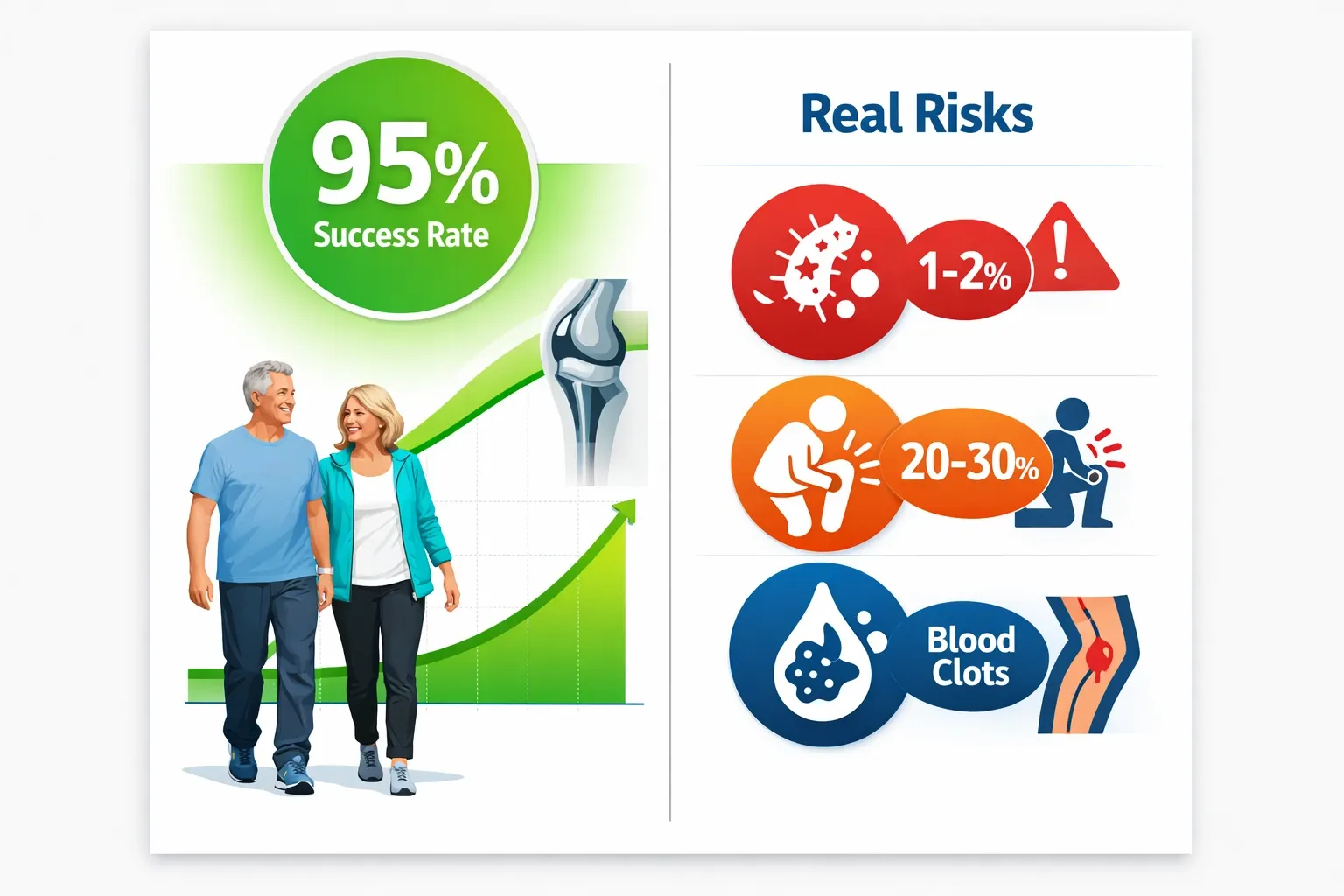
When doctors talk about success with joint replacement surgery, they look at real numbers like these:
For context, that's better than most medications and way better than many other surgeries doctors offer.
When you look at Indian orthopedic hospitals with expert surgeons and proper facilities, especially in Hyderabad where many best orthopedic doctors practice, these numbers jump to 95-98%. That tells you something about how refined this procedure has become.
What "success" actually means to people who need joint replacement:
This isn't theoretical. These are real improvements in how people live their daily lives.
Here's something important: 90-95% of people who have joint replacement surgery say they're satisfied with the results. Even more striking, 90% say they would absolutely have the surgery again if they could turn back time.
That's a huge number. For comparison, most medical procedures don't come close to that satisfaction rate.
But here's the catch we'll talk about later, and it matters: High satisfaction doesn't always mean zero pain. It means meaningful improvement. It means getting your life back. It means your quality of life improved enough that you'd do it again.
Let's be honest: Any surgery carries risks. But knowing what those risks actually are, and how likely they are, helps you make a smart decision.
Blood Clots (The Most Common Systemic Complication)
Most hospitals now have excellent protocols to prevent blood clots. Your orthopedic surgeon will likely keep you on prevention medication for weeks after surgery. The best orthopedic hospitals in Hyderabad follow these protocols strictly.
Infection (The Serious One, But Preventable)
Here's what many websites skip: Your knee replacement can get infected from a completely different infection in your body. Get a dental procedure done? A urinary tract infection? Even a random infection from some other issue? That infection can travel to your knee and settle around the implant.
Bacteria form something called a "biofilm" around the implant, basically a protective shell, which makes antibiotics alone ineffective. If infection happens late, you might need a two-stage surgery to remove the implant, treat the infection, and put in a new one.
Prevention is critical here: This is where your hospital choice matters enormously. NABH-accredited hospitals and those with rigorous infection control protocols minimize this risk significantly. When choosing orthopedic specialist hospitals in Hyderabad, ask about their infection control standards.
Implant Loosening and Wear (Long-Term Reality)
Modern implants last longer than they used to. But they're not permanent. If you're 50 now and get a knee replacement, you might need revision surgery in your 70s. That's not a failure. That's how long they last with today's technology.
Heart Events (Don't Ignore This One)
Here's the surprising part that changes how you prepare: Your risk of a heart attack jumps 8 times in the month after knee replacement surgery. Hip replacement bumps it to 4 times higher risk.
Why? Surgery itself causes significant stress. Inflammation happens. Your heart works harder. If you have any cardiac risk factors (smoking, high blood pressure, age over 60, high cholesterol, obesity), your surgeon absolutely must know and monitor you closely.
This is preventable through proper pre-surgery screening and post-op monitoring by experienced orthopedic doctors in Hyderabad.
Nerve Damage and Numbness
Here's something that will surprise you, and frankly, most websites won't mention it at all:
Your mental state before surgery is a massive predictor of how satisfied you'll be afterward.
This isn't vague psychology talk. This is hard data from peer-reviewed research that orthopedic surgeons increasingly recognize.
If you're depressed before surgery, here's what research shows:
But here's the twist that makes this actually interesting: Depressed patients often experience the same physical improvements as non-depressed patients. Same amount of pain relief. Same function improvement. Same mobility gains.
So why are they six times more dissatisfied?
Because depression affects how your brain processes pain. It affects your motivation to do rehabilitation. It affects your hope and optimism. The surgery works, but your mind doesn't believe it worked.
The good news? When you treat depression before surgery, through therapy, medication, or counseling, surgical outcomes dramatically improve. It's one of the most controllable risk factors, yet most doctors never ask about it.
Similarly, if you're anxious going into surgery, research shows:
Anxiety actually changes your body's inflammatory response. It affects how you heal at a biological level.
Beyond depression and anxiety, research identifies:
Here's the number that should get your attention: 20-30% of people have persistent chronic pain after knee replacement surgery.
Most websites don't mention this. They talk about 90% success rates and move on. But that 20-30% number matters if you're the one in that group.
This isn't just mild discomfort either. We're talking 6-7 out of 10 on the pain scale.
Several reasons explain why joint replacement surgery doesn't eliminate pain for everyone:
The critical window is the first 3-6 months. How aggressively your pain is managed during this time actually predicts whether you'll develop chronic pain later.
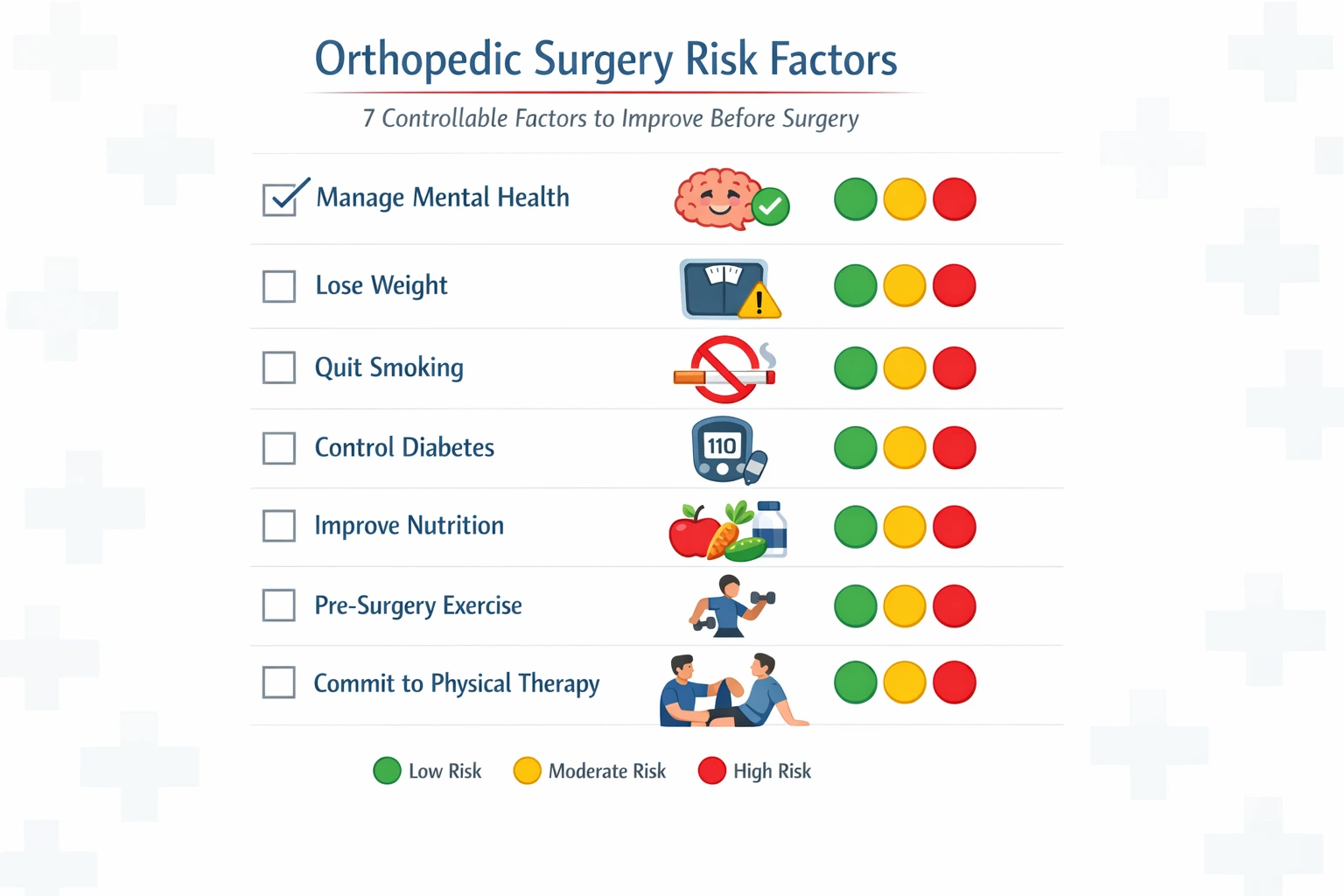
If you're depressed or anxious, get therapy or medication before surgery. This matters as much as losing weight or controlling diabetes. Talk to your orthopedic specialist in Hyderabad about mental health screening before surgery.
Low vitamin D? That's a problem. Low protein? That invites complications.
Smoking destroys wound healing. If you can quit for just 4 weeks before surgery, your complication risk drops significantly.
High weight puts extra stress on your new joint. Losing weight before surgery makes recovery easier and protects your new knee long-term.
If you have diabetes, tight blood sugar control before surgery matters enormously. Poor diabetes control increases:
Patients who exercise and strengthen their legs before surgery recover faster. Your muscles support your healing.
This one is non-negotiable. Skipping physical therapy predicts bad outcomes. Going hard in PT predicts good ones.
Research is clear: Surgeons who do 500+ joint replacements per year have better outcomes than surgeons doing 200 per year. When selecting an orthopedic specialist hospital in Hyderabad or any city, ask about their annual volume.
The best orthopedic doctors in Hyderabad perform hundreds of joint replacements annually. That experience translates to better patient outcomes.
NABH-accredited hospitals maintain better infection control, better processes, better outcomes. This matters for that 1-2% infection risk. This is where you verify the hospital meets national quality standards.
Robotic-assisted joint replacement improves implant positioning, reduces surgical trauma, and speeds recovery. It's not flashy marketing. It's measurable precision. Many top orthopedic hospitals in Hyderabad now offer robotic-assisted surgery.
What You'll Likely Achieve
What Probably Won't Happen
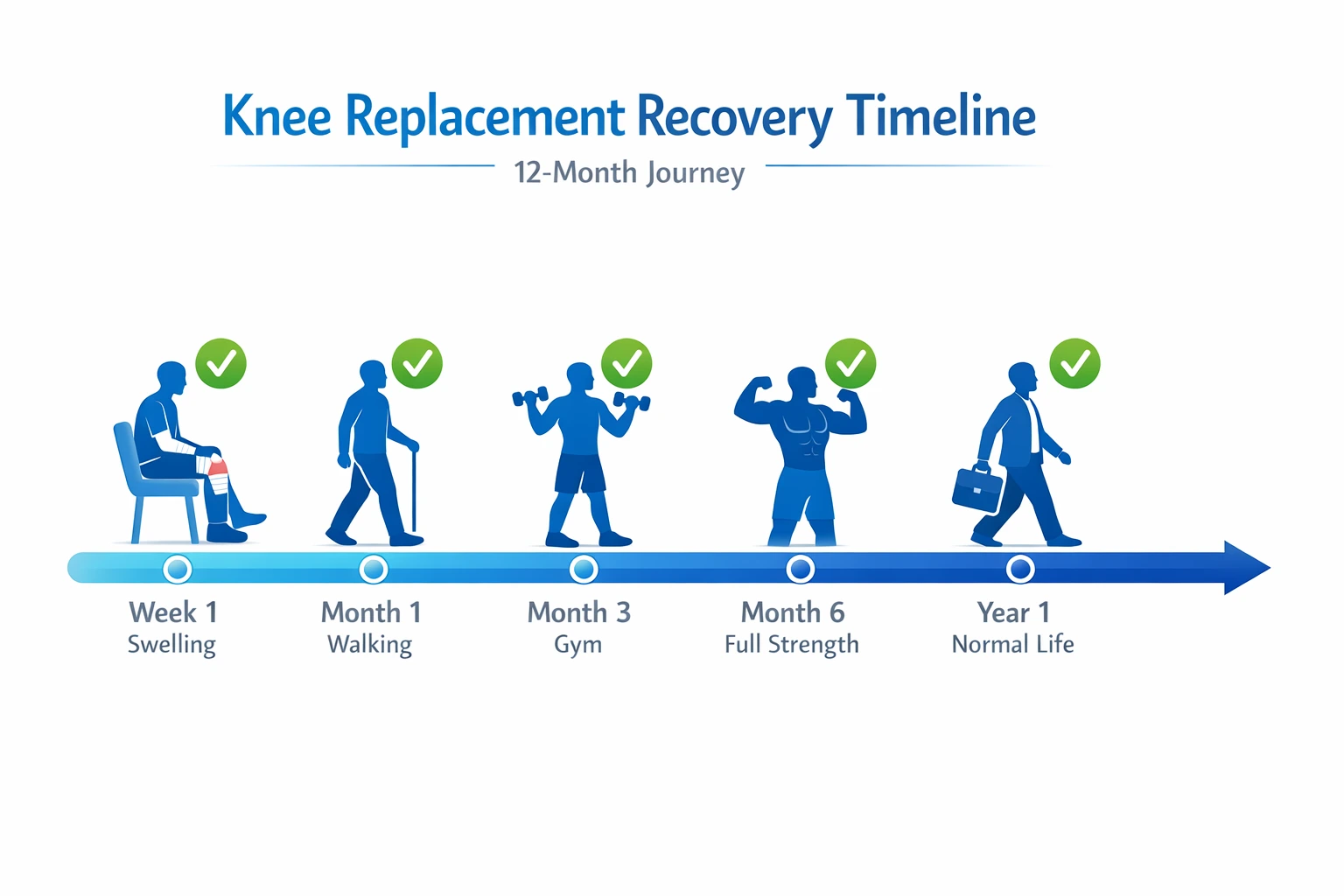
If you're thinking your surgery will turn you into an athlete, recalibrate. If you're hoping to get your quality of life back, that's realistic.
A good surgeon might tell you to wait on surgery if:
You Have an Active Infection Anywhere
Your body can't handle surgery plus fighting infection. Wait until it's cleared.
Your Other Medical Conditions Aren't Controlled
Uncontrolled diabetes, heart disease, or liver disease? Get those stable first. Your body can't prioritize surgery healing if it's fighting other battles.
You're Dealing with Untreated Depression or Severe Anxiety
We've talked about why this matters. Get treated first. Your surgical satisfaction literally depends on it.
You Have Unrealistic Expectations
If you expect to compete in sports or have zero pain, surgery might disappoint you. Better to understand what's realistic beforehand.
About the Surgeon
About the Hospital
When visiting orthopedic doctors in Hyderabad or consulting with any orthopedic surgeon, these questions reveal who takes patient outcomes seriously versus who's just processing cases.
Many of Hyderabad's best orthopedic hospitals now offer German-standard care with robotic precision, combining international quality with local accessibility. That's worth investigating when choosing the best hospital for knee replacement in Hyderabad or other joint replacement procedures.
Joint replacement surgery works. The numbers prove it. 95% of people are satisfied. Most get their lives back.
But it's not magic. It requires:
The best joint replacement outcomes don't just happen. They come from smart choices before, during, and after surgery.
Are you ready to take the next step? If you're considering joint replacement, start by scheduling a consultation with an orthopedic specialist who listens, asks about your mental health, and discusses realistic outcomes. At Germanten Hospital in Hyderabad, we approach every patient with pre-operative mental health screening, robotic-assisted precision surgery, and comprehensive post-operative pain management, because we know that true success is about your quality of life, not just surgical numbers.
The question isn't whether joint replacement can work. The real question is: Are you ready to do the work to make it succeed?
Q: Can a knee replacement get infected years after surgery?
A: Yes. Any bacterial infection in your body can potentially seed the knee. That's why good oral hygiene, treating UTIs promptly, and avoiding untreated infections matters years after surgery. Even dental procedures should be coordinated with your orthopedic surgeon.
Q: Will I be completely pain-free after surgery?
A: 90% of people report mild or no pain. But 20-30% have some persistent pain. It's worth understanding this possibility going in so you're not blindsided.
Q: How long does recovery really take?
A: Most people manage daily activities in 6-8 weeks. Full strength and flexibility usually take 6 months to a year. Don't rush it.
Q: Can I exercise after knee replacement surgery?
A: Yes, but realistically you'll return to comfortable daily activities, not competitive athletics. Walking, swimming, light gym work, yes. Marathon training or competitive sports, probably not.
Q: What if depression affects my recovery?
A: Get treatment before surgery. Therapy, medication, or counseling. It directly impacts satisfaction and outcomes.
Q: How long will my new knee last?
A: 15-20 years is common. After that, it might loosen or wear and need revision. If you're 55, you might need another surgery in your 70s.
Q: How do I choose between different orthopedic hospitals in Hyderabad?
A: Ask about surgeon volume (300+ annually), NABH accreditation, infection rates, robotic technology availability, and their post-operative pain management approach. Don't just pick based on location or cost.