10 Massages and Stretches for a Frozen Shoulder
June 15, 2023
Medical Note: “Water on the knee” describes excess fluid and does not identify its cause. Persistent, recurrent or severe knee swelling should be assessed by a qualified healthcare professional.
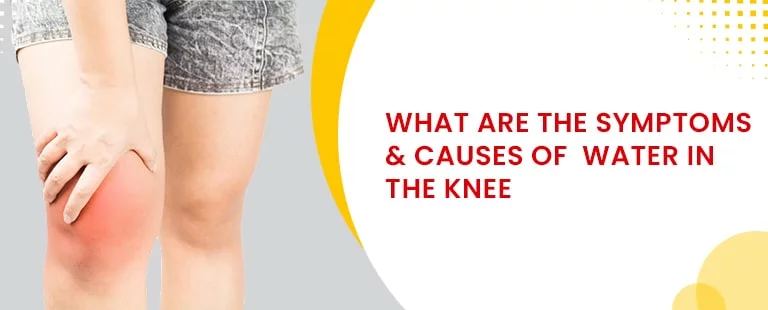
A knee that suddenly looks swollen, feels tight or becomes difficult to bend can be worrying. One possible reason is water on the knee, medically known as knee effusion.
Knee effusion occurs when more fluid than normal accumulates in or around the knee joint. It is not a disease by itself. Instead, it is a sign that something is affecting the knee, such as an injury, osteoarthritis, inflammatory arthritis, gout or, less commonly, an infection.
Some cases improve with appropriate rest and treatment of a minor injury. Others require medical evaluation to identify and treat the underlying problem. A hot, red, severely painful swollen knee accompanied by fever needs prompt medical attention because joint infection is one possible cause.
A healthy knee contains a small amount of synovial fluid, which lubricates the joint and helps the bones and cartilage move smoothly.
When the knee becomes irritated, inflamed or injured, extra fluid may accumulate. This is called knee joint effusion. The excess fluid can make the knee appear enlarged and may cause pain, stiffness or restricted movement.
It is also important to understand that not every swollen knee is a true knee effusion.
For example:
These problems may look like “water on the knee”, but their diagnosis and treatment can differ.
The affected knee may appear larger or puffier than the opposite knee. Swelling may develop suddenly after an injury or more gradually when arthritis or another inflammatory condition is responsible.
Excess fluid can make the knee feel tight, particularly when trying to bend or straighten it.
Pain varies according to the underlying cause. Some people experience a dull ache, while an acute injury, gout flare or infection may cause significant pain.
The knee may become difficult to bend completely. Squatting, climbing stairs, sitting down or getting up may become uncomfortable.
A large effusion or significant knee injury can make standing and walking difficult.
Warmth and redness suggest active inflammation. These symptoms can occur with gout and inflammatory arthritis, but they can also occur with joint infection.
If fluid develops after a ligament or meniscus injury, the knee may feel unstable or may give way during movement.
There is no single cause of knee effusion. Doctors generally consider whether the swelling followed an injury or developed without an obvious injury.
Trauma is a common cause of sudden knee swelling.
Possible injuries include:
A significant ACL injury, for example, may produce obvious swelling within several hours of the injury along with pain and instability.
Rapid swelling after trauma deserves medical assessment, particularly when the person cannot bear weight or the knee feels unstable.
Knee osteoarthritis can cause pain, stiffness and swelling as changes occur in the joint cartilage and surrounding structures.
Inflammation associated with osteoarthritis can sometimes increase joint fluid, resulting in an effusion.
People with osteoarthritis may notice that swelling becomes worse after prolonged activity.
Rheumatoid arthritis is an autoimmune inflammatory condition that can affect the lining of joints.
It may cause:
Unlike an isolated knee injury, rheumatoid arthritis may affect several joints and can cause symptoms on both sides of the body.
People with recurring joint swelling may benefit from assessment through a Rheumatology and Arthritis Centre.
Gout develops when urate crystals accumulate in a joint and trigger inflammation.
Although the big toe is well known as a site of gout, the knee can also be affected.
A gout flare may cause:
A swollen knee should not automatically be assumed to be gout solely because a person's blood uric acid is elevated. Clinical evaluation and, in selected cases, joint-fluid analysis may be required.
A joint infection is an important cause of acute knee swelling that requires prompt treatment.
Possible symptoms include:
An infected joint can become seriously damaged if treatment is delayed. A very painful, hot swollen knee with fever should therefore be medically assessed urgently.
Calcium pyrophosphate crystals can accumulate in joints and trigger episodes of painful inflammation. This condition commonly affects the knee and can sometimes resemble gout.
Repeated stress from running, jumping, kneeling or sudden increases in physical activity can irritate structures around the knee.
Overuse may produce swelling, particularly when associated with tendinitis, bursitis or another mechanical problem.
These conditions deserve separate consideration because they are often described by patients as “fluid in the knee”.
Bursitis occurs when one of the fluid-filled bursae around the knee becomes inflamed.
A Baker's cyst produces a fluid-filled swelling behind the knee and may develop alongside arthritis or other knee inflammation.
Neither should automatically be treated as the same condition as fluid directly inside the knee joint.
Treatment begins with identifying why the fluid accumulated.
An orthopaedic doctor may ask:
A physical examination evaluates swelling, tenderness, movement and joint stability.
Depending on the suspected cause, further investigations may include:
There is no single water on knee treatment that is appropriate for everyone.
Treatment is determined by the cause and severity.
A clinician may recommend measures such as:
Avoid placing ice directly on the skin.
Do not repeatedly massage a knee that is very swollen, hot, red or severely painful without knowing the cause.
Pain-relieving or anti-inflammatory medicines may be appropriate for some patients, but the choice depends on age, kidney health, gastrointestinal conditions, cardiovascular risk, other medications and the underlying diagnosis.
Avoid starting or repeatedly taking painkillers without medical advice when the cause of significant knee swelling is unknown.
Once serious causes have been excluded and the acute problem is controlled, physiotherapy may help improve:
Patients recovering from an injury or managing chronic knee conditions can explore physiotherapy and rehabilitation in Hyderabad.
If the effusion is related to gout, rheumatoid arthritis or another inflammatory condition, treatment focuses on controlling that underlying disease rather than simply removing the fluid.
Septic arthritis requires urgent medical treatment. Depending on the infection, management can include antimicrobial treatment and drainage of the infected joint.
Aspiration may be useful when doctors need to determine the cause of unexplained fluid or relieve pressure from a substantial effusion.
It is not automatically required for every swollen knee.
Surgery may be needed when a significant structural problem is identified, such as certain ligament, meniscus or cartilage injuries.
Arthroscopy should therefore be described as a treatment for selected underlying knee problems, not as a routine treatment for knee effusion.
Knee replacement treats severe structural joint disease such as advanced osteoarthritis in appropriately selected patients. It is not a treatment simply because fluid is present in the knee.
Patients with advanced arthritis that continues to cause major pain and disability despite appropriate non-surgical treatment may be evaluated for knee replacement surgery in Hyderabad.
Some mild effusions caused by temporary overuse or a minor injury may settle as the knee recovers.
However, recurring or unexplained knee swelling should not simply be ignored.
The fluid may continue to return when an underlying condition such as osteoarthritis, gout, inflammatory arthritis, meniscus damage, ligament injury or infection has not been appropriately addressed.
Until the cause is clearer, avoid:
Keeping completely immobile for a prolonged period is also not ideal for many knee conditions. The appropriate amount of activity depends on the diagnosis.
Seek prompt medical attention if:
A painful hot knee with fever is particularly important because infection must be considered.
For persistent swelling or knee pain, evaluation through an orthopaedic hospital in Hyderabad can help identify whether the problem is related to arthritis, injury, inflammation or another condition.
Prevention depends on the underlying diagnosis, but general measures can include:
The aim should not simply be to “remove the water”. The long-term goal is to identify and manage why the knee keeps producing excess fluid.
Water on the knee or knee effusion is a symptom rather than a diagnosis. Fluid may accumulate because of an injury, osteoarthritis, gout, rheumatoid arthritis, infection or several other conditions.
While mild swelling may sometimes settle with appropriate activity modification and basic supportive care, repeated, unexplained or severe swelling deserves proper evaluation.
Treatment should focus on the actual cause of the effusion rather than simply removing fluid.
If your knee remains swollen, painful or difficult to move, consult the orthopaedic team at Germanten Hospitals for an individual assessment and appropriate treatment plan.
Book an orthopaedic consultation at Germanten Hospitals, Hyderabad, if persistent knee swelling, pain or stiffness is affecting your walking or daily activities.
Water on the knee usually refers to knee effusion, which means an abnormal accumulation of fluid in or around the knee joint. It can occur because of an injury, arthritis, gout, infection or another knee condition.
Common symptoms include visible swelling, stiffness, pain, tightness, reduced knee movement and difficulty bearing weight. Warmth or redness may occur when inflammation is present.
Not always. Mild swelling after overuse may settle, but severe or recurrent swelling can indicate an injury, inflammatory disease or infection. A hot, red knee with fever requires prompt medical assessment.
There is no fixed recovery time because it depends on the cause. An effusion from minor overuse may settle relatively quickly, while arthritis or a significant ligament injury may produce persistent or recurring swelling.
It depends on the cause and severity. Gentle movement may be appropriate in some conditions, but you should avoid forcing weight through a severely painful or unstable knee. Seek assessment if you cannot comfortably bear weight.
No. Aspiration is useful in selected cases for diagnosis or symptom relief, but many knee effusions do not require drainage. Treatment should address the underlying cause.
Yes. Osteoarthritis can be associated with inflammation and excess joint fluid, causing a soft swollen knee or effusion.
Yes. Gout can affect the knee and cause sudden pain, swelling, redness and warmth due to inflammation caused by urate crystals.
A wrapped cold pack is commonly used for swelling following a recent minor injury. Heat is not automatically appropriate for every swollen knee, particularly when it is acutely hot or inflamed. If the cause is unclear, seek medical advice.
For recurring knee swelling, you can consult an orthopaedic specialist at Germanten Hospitals, Hyderabad for evaluation of injuries, osteoarthritis, or structural knee problems. If inflammatory or autoimmune arthritis is suspected, the doctor may also recommend a rheumatology evaluation.