What is CPR? A Step-by-Step Guide to Cardiopulmonary Resuscitation
June 15, 2023
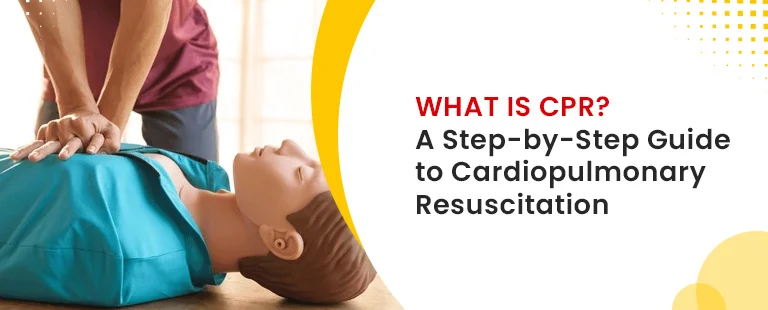
CPR, or Cardiopulmonary Resuscitation, is an emergency life-saving procedure performed when a person's heart stops beating or when the person is not breathing normally. It combines chest compressions and, in trained cases, rescue breaths to help maintain blood flow and oxygen supply to vital organs until emergency medical help arrives.
When the heart suddenly stops pumping blood, the brain, heart, lungs, and other organs do not receive enough oxygen. Even a few minutes without oxygenated blood flow can cause serious damage. This is why quick action is important. CPR does not always restart the heart by itself, but it helps keep blood moving through the body and increases the chances of survival until trained medical professionals or an Automated External Defibrillator, also called an AED, can be used.
For bystanders, CPR may feel intimidating. However, even hands-only CPR, which means giving continuous chest compressions without mouth-to-mouth breathing, can make a major difference in an emergency. Knowing the basic CPR steps can help you respond with more confidence if someone collapses due to suspected cardiac arrest.
This guide explains what CPR means, when CPR is given, the step-by-step CPR procedure, how AEDs are used, and how CPR differs for adults, children, and infants.
CPR stands for Cardiopulmonary Resuscitation. The word "cardio" refers to the heart, "pulmonary" refers to the lungs, and "resuscitation" means reviving or attempting to restore life functions.
In simple terms, CPR is an emergency procedure used when a person is unconscious and not breathing normally. It is most commonly needed during cardiac arrest, a condition in which the heart suddenly stops beating effectively. When this happens, blood flow to the brain and other vital organs stops or becomes severely reduced.
CPR works by using external chest compressions to manually pump blood through the body. Rescue breaths may also be given by trained responders to provide oxygen. The main goal is to keep oxygenated blood circulating until the heart can be restarted or medical care takes over.
CPR is different from treatment for a heart attack. A heart attack usually happens when blood flow to part of the heart is blocked, but the person may still be awake and breathing. Cardiac arrest is when the heart stops beating normally and the person becomes unconscious, unresponsive, and not breathing normally. A heart attack can sometimes lead to cardiac arrest, but both conditions are not the same.
CPR is important because it gives a person a chance of survival during cardiac arrest. When the heart stops, the body loses its natural pumping function. Without blood circulation, the brain can begin to suffer damage within minutes.
The purpose of CPR is to:
Immediate CPR is especially important because every minute matters. The earlier chest compressions begin, the better the chance that oxygenated blood can continue reaching the brain and heart. If an AED is available, using it quickly can further improve the chances of restoring a normal heart rhythm.
Many cardiac arrests happen outside hospitals, often at home, at work, or in public places. In such situations, bystanders are usually the first people who can help. This makes basic CPR awareness useful not only for healthcare professionals, but also for family members, teachers, office staff, security teams, drivers, fitness trainers, and the general public.
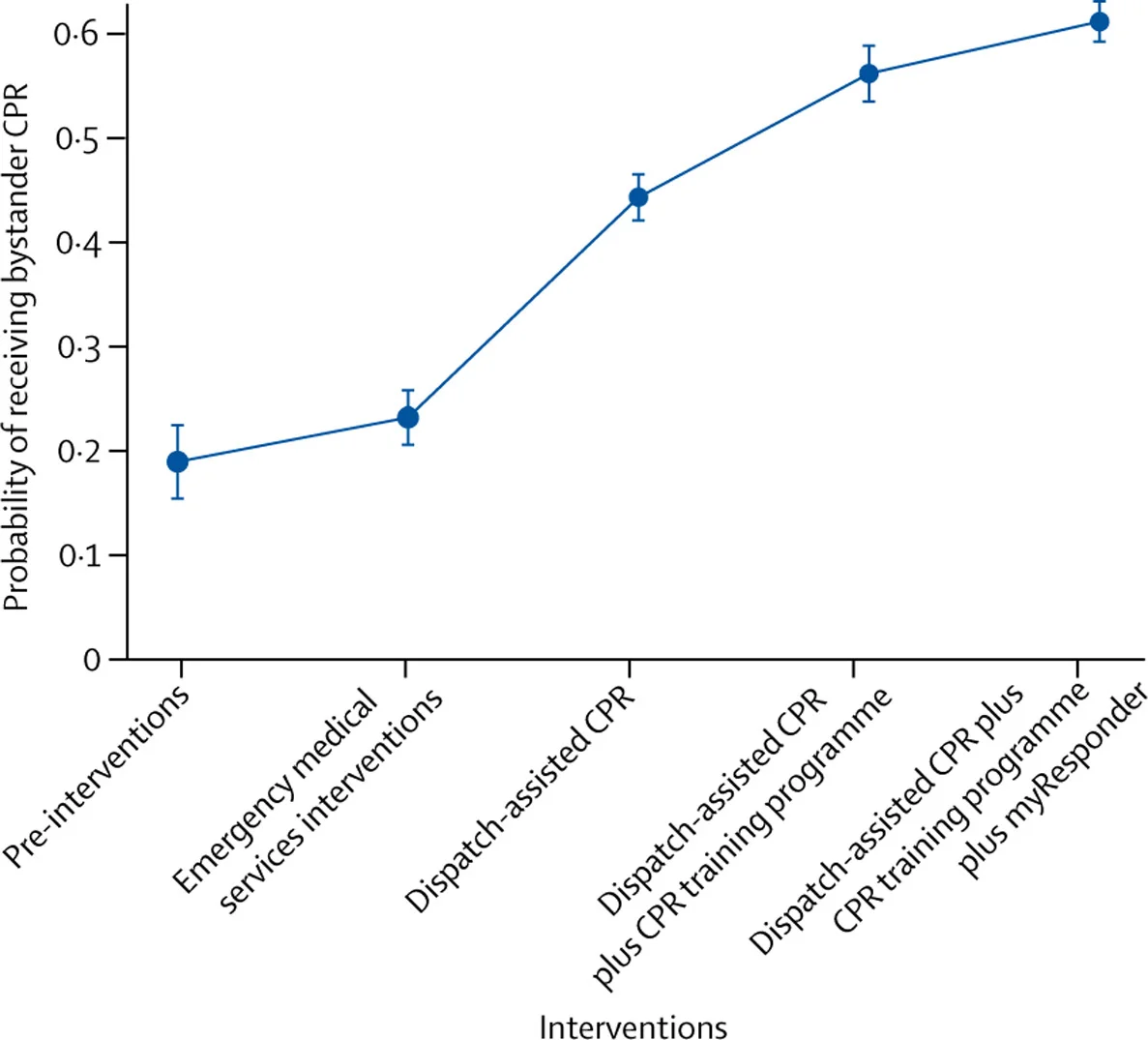
CPR should be started when a person is unresponsive and not breathing normally. Gasping, irregular breathing, or noisy occasional breaths should not be treated as normal breathing. These may be signs of cardiac arrest.
You may need to perform CPR if the person:
Before starting CPR, always check the scene for safety. Do not put yourself in danger. If the area is unsafe, such as near traffic, fire, electrical wires, or violence, move away and call emergency services immediately. Help only if it is safe to do so.
The following CPR steps are mainly for adults and teenagers who suddenly collapse. If you are not trained or are uncomfortable giving rescue breaths, hands-only CPR with chest compressions is still helpful.
Before touching the person, quickly check whether the surroundings are safe. Look for traffic, fire, electricity, falling objects, water, or any other danger. If the place is unsafe, call emergency services and wait for help unless the person can be moved safely without risk.
Your safety is important. You cannot help effectively if you become injured.
Kneel beside the person. Tap their shoulders firmly and ask loudly, "Are you okay?"
If the person responds, keep them comfortable and call for medical help if needed. If the person does not respond, they may be unconscious and in need of immediate assistance.
Do not spend too much time trying to wake the person. A quick check is enough.
If the person is unresponsive, call emergency services immediately. In India, you can call 112 for emergency response. Depending on local availability, ambulance numbers such as 108 or 102 may also be used.
If other people are nearby, point to one person and say clearly, "Call emergency services now." Ask another person to bring an AED if available.
If you are alone and have a mobile phone, call emergency services on speaker mode so you can begin CPR while speaking to the dispatcher. Follow the dispatcher's instructions carefully.
Look at the person's chest and face. Check whether they are breathing normally. Do not spend more than a few seconds on this step.
Start CPR if the person:
Gasping is not normal breathing. It can happen during cardiac arrest and should be treated as an emergency.
Chest compressions are the most important part of CPR. They help push blood from the heart to the brain and other organs.
To give chest compressions:
For adult CPR, compress the chest at a rate of 100 to 120 compressions per minute. Push down at least 2 inches, or around 5 cm, and allow the chest to fully come back up between compressions. This full recoil is important because it allows the heart to refill with blood before the next compression.
Avoid leaning on the chest between compressions. Keep interruptions as short as possible.
A helpful way to remember the rhythm is to compress at a steady, fast beat, similar to songs often used in CPR training such as "Stayin' Alive." The key is to maintain strong, regular compressions.
If you are trained in CPR and willing to give rescue breaths, follow the 30:2 cycle. This means 30 chest compressions followed by 2 rescue breaths.
To give rescue breaths:
Do not give forceful breaths. Each breath should be enough to make the chest rise. Too much air can be harmful and may interrupt compressions.
If the chest does not rise, reposition the head and try again. If you are not trained, not confident, or worried about mouth-to-mouth contact, continue hands-only CPR with chest compressions.
An AED, or Automated External Defibrillator, is a portable device that checks the heart's rhythm and can deliver an electric shock if needed. AEDs are often found in airports, offices, malls, schools, gyms, and hospitals.
Use an AED as soon as it is available.
To use an AED:
You do not need to decide whether the person needs a shock. The AED analyzes the heart rhythm and guides you.
Continue CPR until:
CPR is physically demanding. If another trained person is available, switch every two minutes to maintain effective chest compressions.
Hands-only CPR means giving continuous chest compressions without rescue breaths. It is recommended for untrained bystanders who see an adult or teenager suddenly collapse.
Hands-only CPR has two main steps:
This method is simple and can be started quickly. It is especially useful when a bystander is not trained in rescue breathing or is not comfortable giving mouth-to-mouth breaths.
However, rescue breaths are still important in some situations, especially when cardiac arrest is caused by lack of oxygen. This may include drowning, choking, drug overdose, and emergencies involving children or infants. In these cases, trained responders should give both chest compressions and rescue breaths.
CPR steps for children and infants are similar to adult CPR, but the technique must be gentler because their bodies are smaller.
For a child, usually between 1 year and puberty:
If child pads are not available, adult AED pads may be used, but they should not touch each other.
For an infant under 1 year:
For babies and children, breathing problems are a common cause of cardiac arrest. This is why rescue breaths are more important in paediatric CPR than in many sudden adult collapses.
Even when people know the basic CPR procedure, mistakes can happen during panic. Try to avoid these common errors:
Do not wait too long to begin CPR if the person is unresponsive and not breathing normally. Early chest compressions can make a difference.
Chest compressions must be deep enough to move blood. Shallow compressions may not circulate blood effectively.
After every compression, allow the chest to return to its normal position. This helps the heart refill with blood.
Interruptions reduce the effectiveness of CPR. Pause only when necessary, such as for rescue breaths, AED analysis, or when emergency professionals take over.
If trained to give rescue breaths, avoid forceful or excessive breathing. Give enough air to make the chest rise.
If an AED is available, use it as soon as possible. AEDs are designed for public use and provide voice instructions.
Reading about CPR is useful, but hands-on CPR training is the best way to build confidence. Certified CPR courses teach correct hand placement, compression depth, compression rate, rescue breathing, AED use, and how to respond under pressure.
CPR training is useful for:
Many CPR courses also include Basic Life Support, first aid, choking response, and AED training. Since CPR skills can fade over time, refresher training is recommended.
CPR is used during emergencies, but heart health awareness can help reduce the risk of serious cardiac events. Conditions such as high blood pressure, diabetes, high cholesterol, smoking, obesity, and a family history of heart disease can increase the risk of heart problems.
Regular check-ups with a cardiologist may help detect heart-related concerns early. People with chest pain, breathlessness, palpitations, fainting episodes, unexplained sweating, or discomfort spreading to the arm, jaw, or back should seek medical advice promptly.
CPR awareness and preventive heart care both play important roles. CPR helps during an emergency, while regular heart evaluation helps identify risk factors before they become life-threatening.
CPR, or Cardiopulmonary Resuscitation, is a life-saving emergency procedure used when a person is unresponsive and not breathing normally. It helps maintain blood circulation to the brain and heart until emergency medical help arrives.
The most important CPR steps are simple: check safety, check response, call emergency services, start chest compressions, give rescue breaths if trained, use an AED if available, and continue until help arrives or the person recovers.
For untrained bystanders, hands-only CPR can still save lives. Pushing hard and fast in the centre of the chest is better than doing nothing. For trained responders, the 30 compressions and 2 breaths cycle remains an important method, especially for children, infants, drowning, choking, or breathing-related emergencies.
CPR may feel difficult to perform in a real situation, but awareness and training can prepare you to act quickly. In an emergency, timely action can make the difference between life and death.
CPR can help during a medical emergency, but timely diagnosis, regular heart check-ups, and expert cardiac care are equally important for long-term heart health. If you or your loved one has symptoms such as chest pain, breathlessness, irregular heartbeat, fainting, dizziness, or a history of heart disease, do not delay medical evaluation.
At Germanten Hospital, our cardiology team provides expert consultation, diagnostic evaluation, and personalised treatment guidance for heart-related conditions. From preventive heart health check-ups to advanced cardiac care, we help patients understand their condition and take the right steps at the right time.
Book an appointment with Germanten Hospital today for trusted heart care and timely medical guidance.
What is the full form of CPR?
CPR stands for Cardiopulmonary Resuscitation. It is an emergency procedure used when a person's heart stops beating or when the person is not breathing normally.
What is the first step of CPR?
The first step is to check whether the scene is safe. After that, check if the person is responsive. If the person is unresponsive and not breathing normally, call emergency services and start chest compressions.
What are the main CPR steps?
The main CPR steps are: check safety, check responsiveness, call emergency help, check breathing, begin chest compressions, give rescue breaths if trained, use an AED if available, and continue CPR until help arrives.
How many chest compressions are given in one CPR cycle?
One standard CPR cycle for trained responders includes 30 chest compressions followed by 2 rescue breaths. This is often called the 30:2 CPR ratio.
What is the correct CPR compression rate?
For adult CPR, chest compressions should be given at a rate of 100 to 120 compressions per minute. The chest should be allowed to fully recoil after each compression.
Can CPR be done without mouth-to-mouth breathing?
Yes. Hands-only CPR can be performed by untrained bystanders for adults or teenagers who suddenly collapse. It involves continuous chest compressions without rescue breaths.
When should CPR be stopped?
CPR should continue until the person starts breathing normally, an AED is ready to analyze the heart rhythm, emergency medical professionals take over, another trained responder replaces you, you are too exhausted to continue, or the scene becomes unsafe.
Is CPR the same for adults, children, and infants?
The basic goal is the same, but the technique is different. Adults usually need two-hand compressions. Children may need one or two hands depending on size. Infants need two-finger compressions and gentler rescue breaths.
Why is an AED important during CPR?
An AED checks the heart rhythm and can deliver a shock if needed. It can help restore a normal heart rhythm in certain types of cardiac arrest. CPR should continue before and after AED use as instructed by the device.
Should everyone learn CPR?
Yes. CPR is a practical life-saving skill. Learning CPR can help you respond quickly during emergencies at home, work, school, or public places.
Can I consult Germanten Hospital for heart-related symptoms after a CPR emergency?
Yes. If a person has recovered after a CPR-related emergency or has symptoms such as chest pain, breathlessness, irregular heartbeat, fainting, or dizziness, it is important to get a proper cardiac evaluation. At Germanten Hospital, the cardiology team can help assess heart health, identify risk factors, and guide the next steps for treatment or preventive care.
How can Germanten Hospital help with heart health and emergency care awareness?
Germanten Hospital supports patients with expert heart care, cardiac consultations, diagnostic evaluation, and preventive heart health guidance. While CPR is an emergency response that should be started immediately when needed, timely consultation with a cardiologist can help detect heart-related conditions early and reduce future risks.
Reference links: